
moesbok.com
julesgverne.com
EXPLORE interactice Story Map: [click on image to start]

.
Jules Verne’s Scandinavia and «Le 9672»
# Norse Saga texts – links to Gulf of St. Lawrence
# Hetzel: «Pourquoi, diable! Verne, a-t-il choisi ce numéro difficile à retenir» (1885).
Proposed Hypothesis, as to this «WHY»
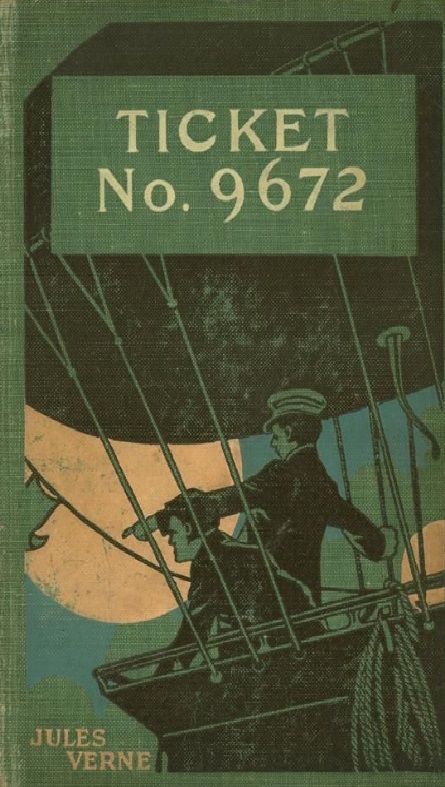 Donahue, Chicago |
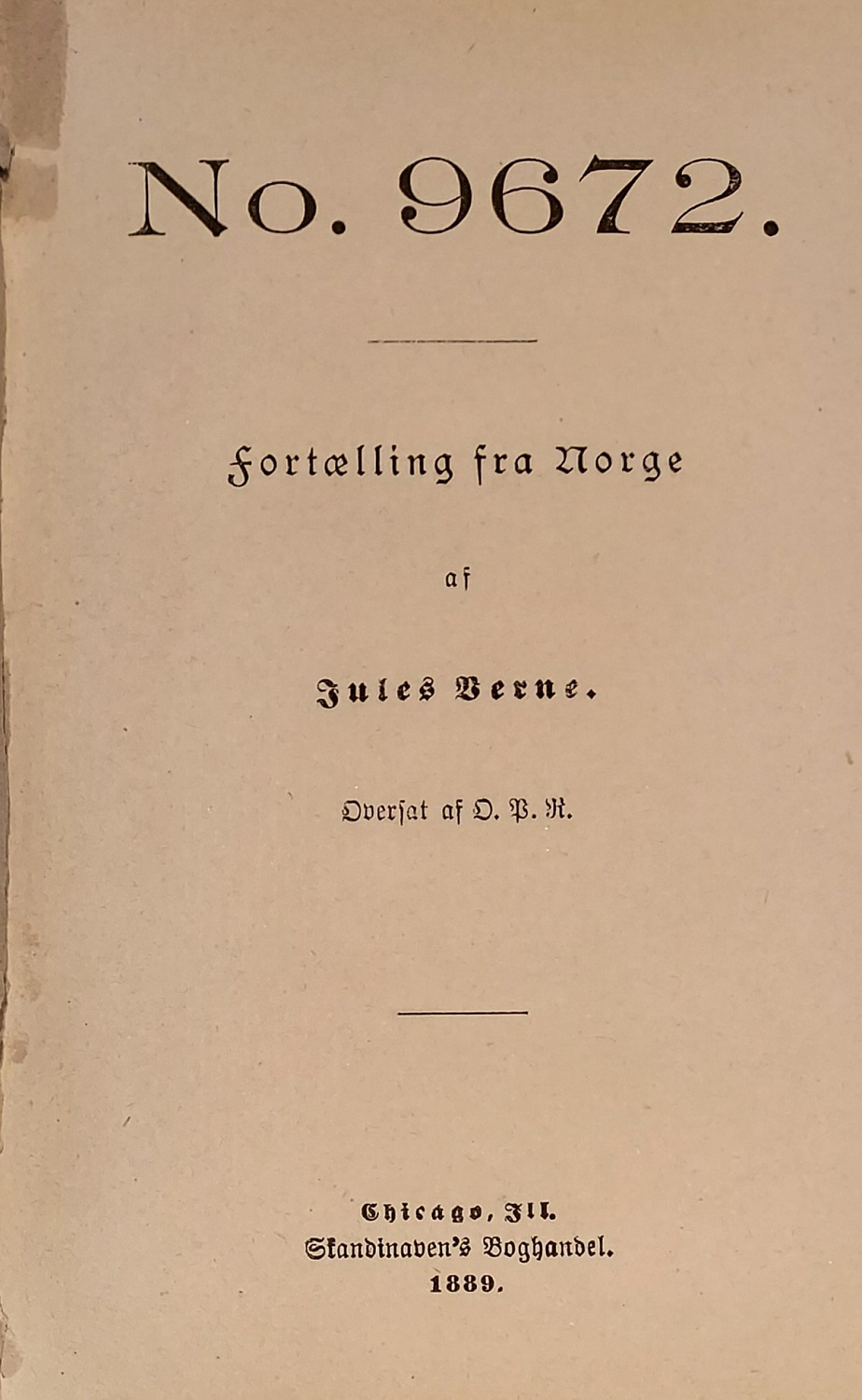 Skandinaven’s Bogh. Chicago 1889 |
. |
.
:
:
:
:
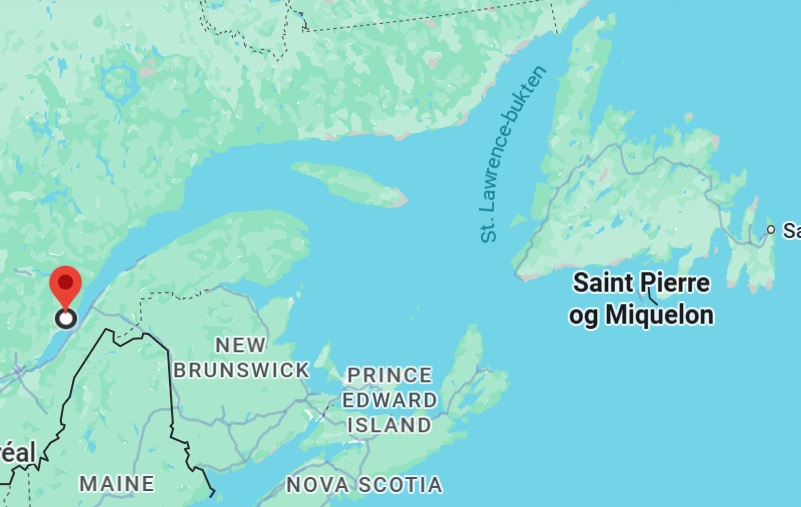
NAJVS 2026 – La Malbaie / Gulf of St. Lawrence
This region …..
|
. |
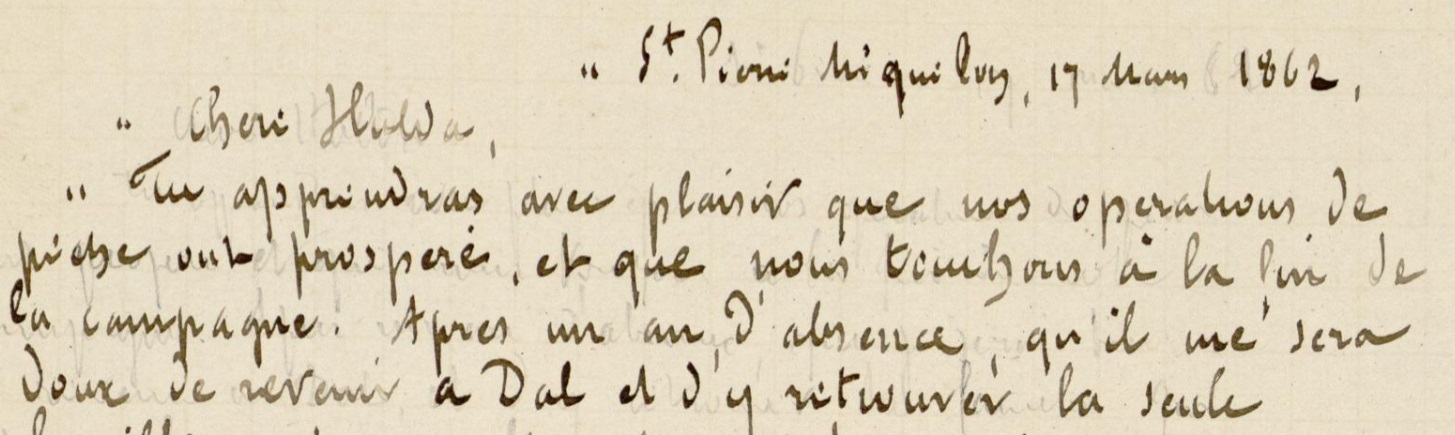 (letter from Norwegian fisherman, later missing at sea – «Lottery Ticket», 1886)
– – – – – – – – – – – – – –St. Pierre Miquelon, 17 Mars 1862,
«Chère Hulda,
« Tu apprendras avec plaisir que nos opérations de
pêche ont prospéré et que […] nous touchons à la fin de
la campagne ! Après un an d’absence, [combien je serai heureux]
de revenir à Dal, et d’y retrouver la seule [famille qui me reste et qui est la tienne.]»
(Verne (BL): 1886
.
.
Verne: «Great explorers»
Grands voyages et des grands voyageurs (1864/70) :
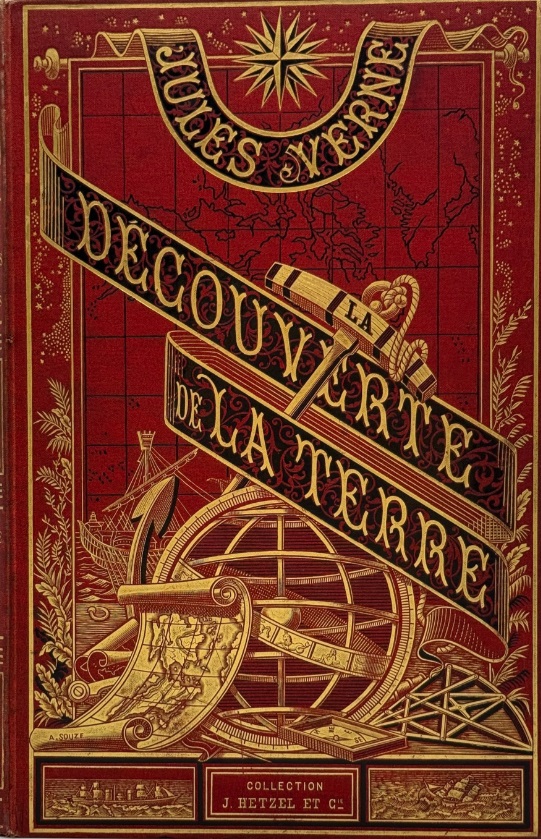
Ch. III – «Expéditions Polaires, recherche au passage du Nord-Ouest :

«Thus these sailors were, the Northmen
– a name generally given to those Scandinavian, Norwegian, and Danish pirates, during the Middle Ages […]
But, while all the information we owe to the ancient Greeks and Romans about these Hyperborean lands is extremely vague […]
the same cannot be said of the adventurous enterprises of
‘the men of the north’, as recounted in the Sagas.»
—-
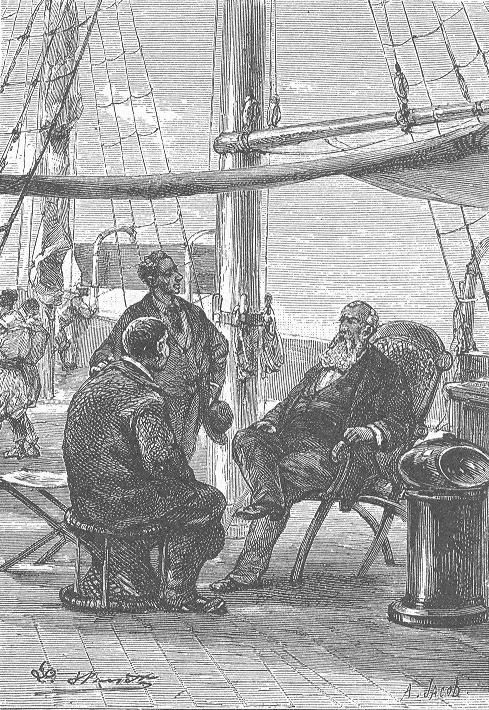
Sandorf
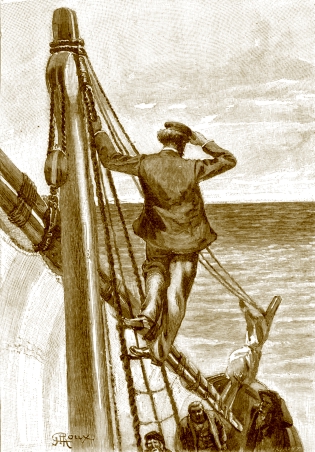
Antifer
Why this fascination for the long distance sailors of the North ?
.
:
:
.
Verne, while commenting on ‘Christophe Colomb’ :
(«Great explorers» CH.VII )
«The Normans of Scandinavia had certainly landed on these unknown shores.
The Greenland colonists had explored the land of Vinland.
But such was the prevailing mindset at that time –
such was the improbability of the existence of a new world –
that Greenland, Vinland, and Labrador were considered merely an extension of European lands.»
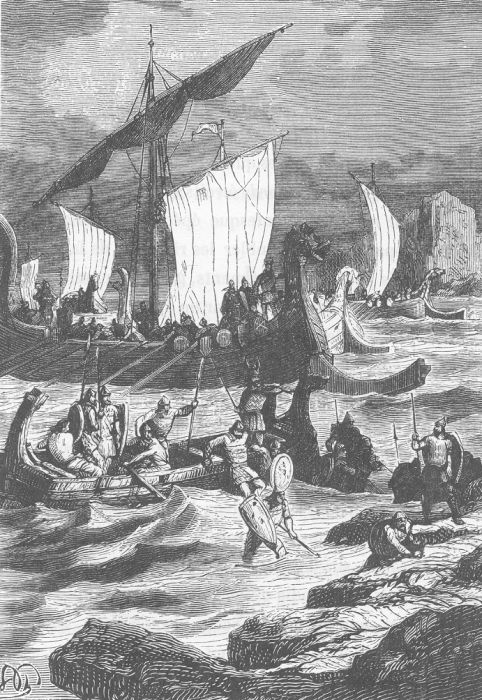
Verne referred to Norse Sagas:
The Edda Saga (mythology) (JM 1861),
The Heimskringla Saga (kings) (CT 1864)
The Greenlanders’ Saga (vikings) (PE 1870)
Often described Scandinavia and the realm of the Northmen,
in Norway, Denmark, Faroes, Iceland and Greenland …
Last time commented in:
Chasse au Météore / «The Meteor hunt» (1901/1908)
Verne: «Greenland means ‘Terre Verte’. ‘Terre Blanche’ would have been more appropriate for this snow-covered country. It could only have been named so, by the pleasant irony of its godfather, a certain ‘Erik the Red’, a 10th-century sailor, who was probably no more red than Greenland is green.
Perhaps, after all, this Scandinavian was hoping to persuade his compatriots to come and colonize this green Hyperborean region».
.
.
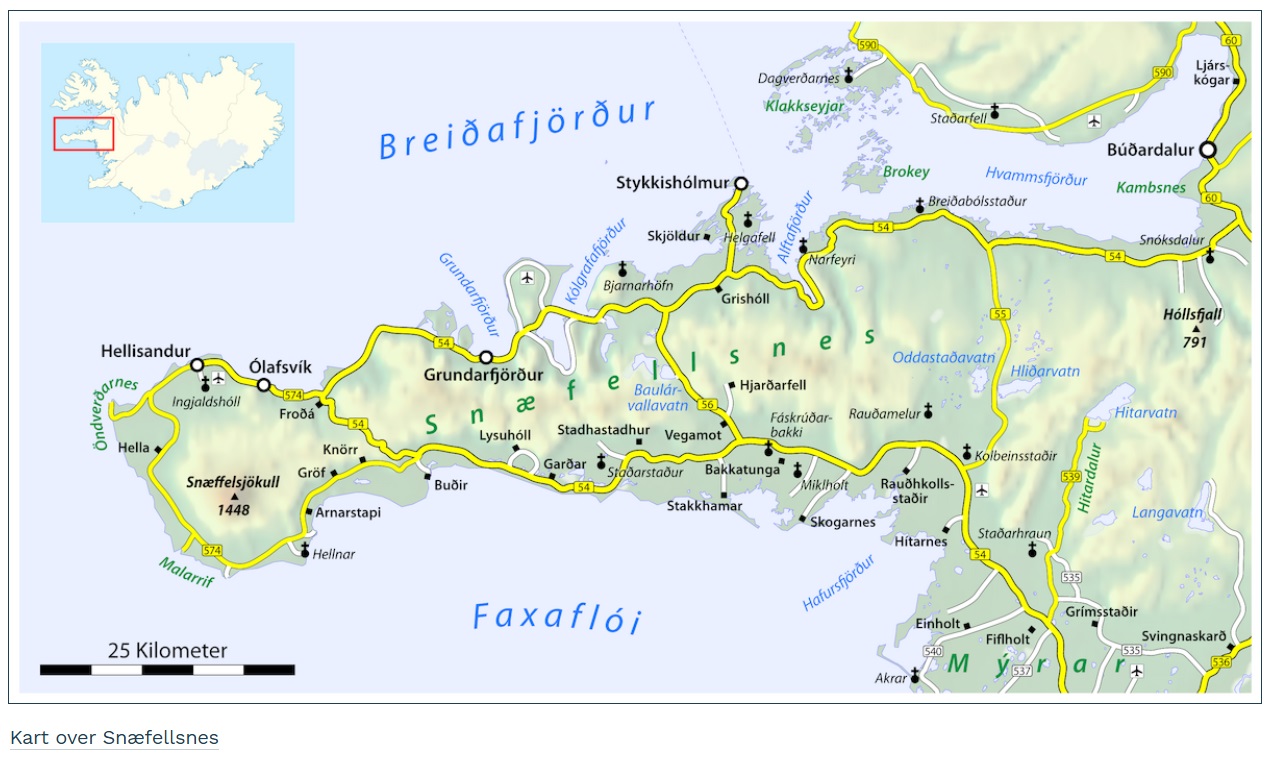
 According to the Sagas,
‘Erik Le Rouge‘ set out from ‘Snaefell’- peninsula on Iceland,
(984) towards Greenland, and settled there.
– following in the wake of countryman Ingolf Guunbjorn, it’s discoverer, five years earlier.
 .
.
.
Verne, ( «Great explorers» 1864/70) :
«Erik le Rouge, chassé d’Islande pour un muerte, retrouva la terre entrevue par Guunbjorn […]
Il doubla donc le cap Farewell à l’extrémité du Groenland,
se fixa sur la côte occidentale et construsit pour lui et ses compagnons de vastes demeures […] «
|
|
|


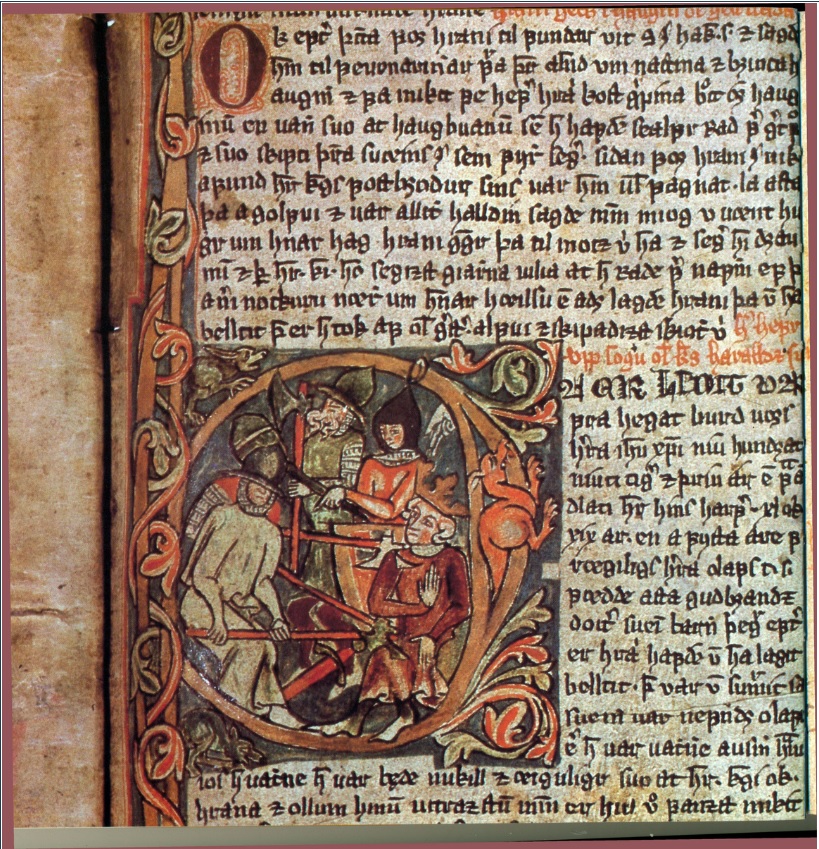
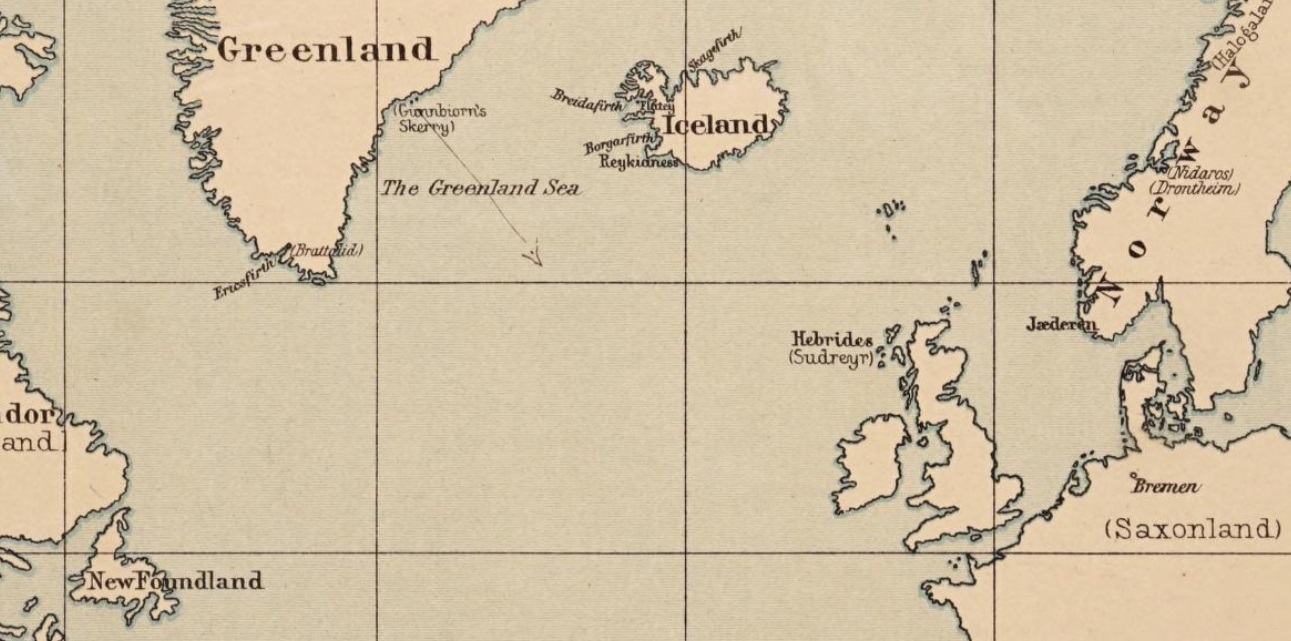
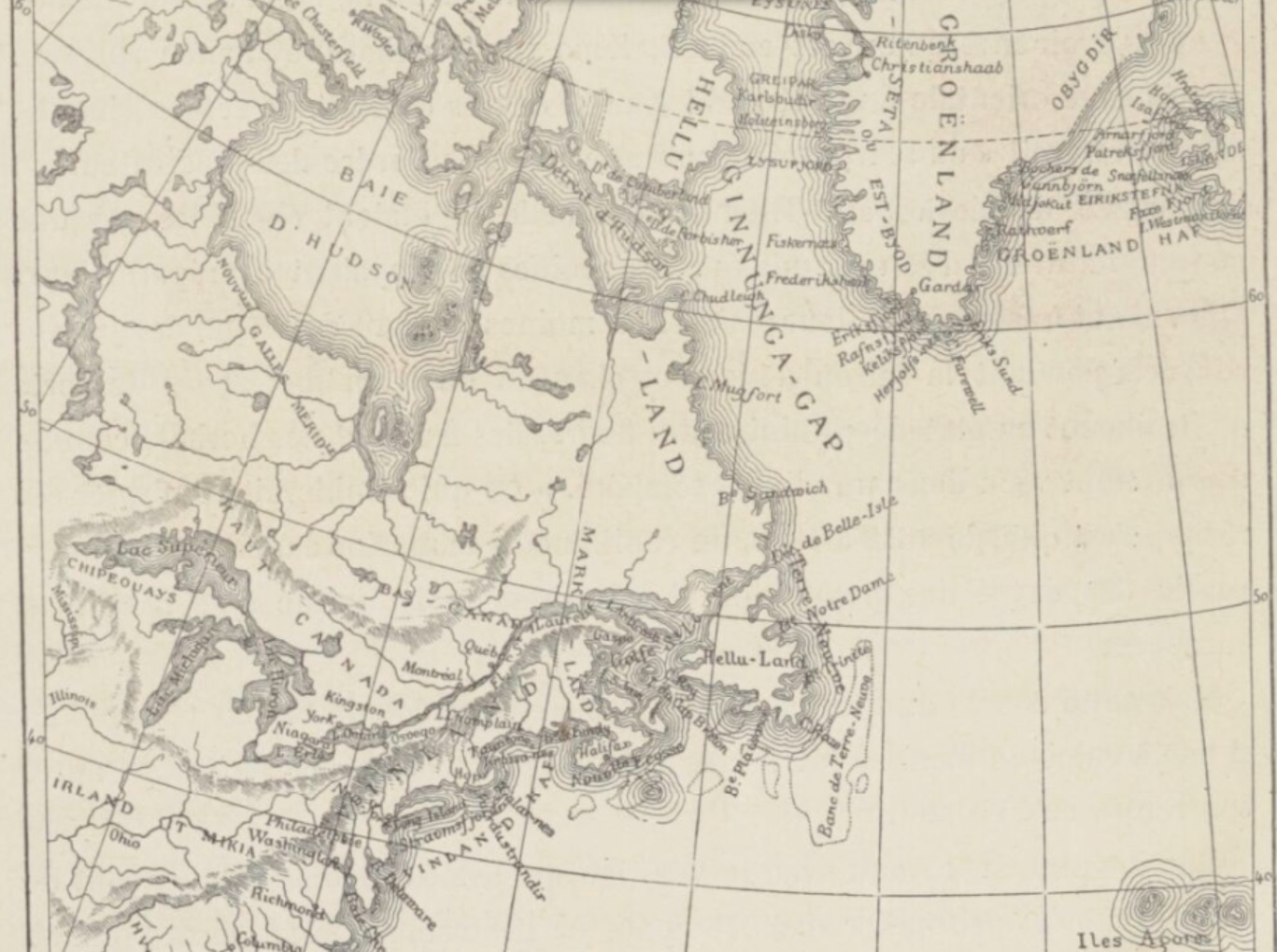
Map North Atlantic
Norway – Greenland, Sailing distance 8 days.
Norse, Western Realm – extending to Greenland 500 years
.
.
.
.
.
He set out from Snæfellsnes ….
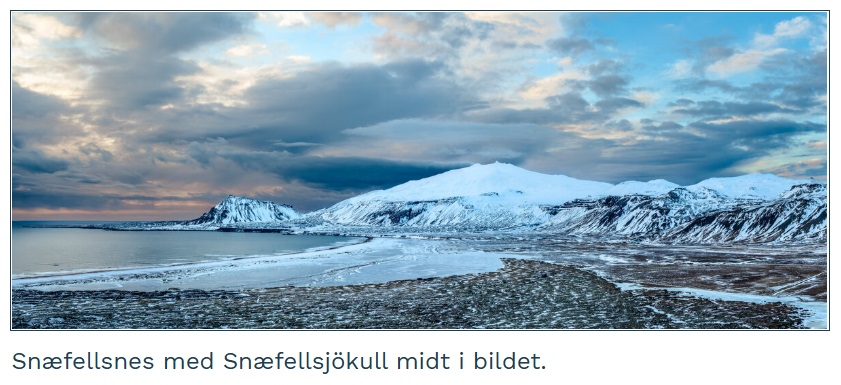
Maybe Verne’s inspiration,
for the selected starting point of Prof. Lidenbrock ?
– and his descent into the Earth from Snaefells -Jökull ?
Novel conceived same period – as quoting Sagas in ‘Great Explorers’
..
1864 – Journey to the Centre of the Earth:
Verne:
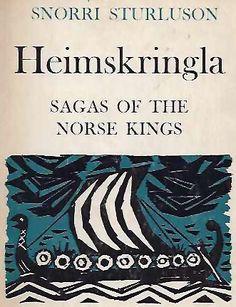
«c’est l’Heims-Kringla de Snorre Turleson,
le fameux auteur islandais du XIIe siècle.
C’est la Chronique des princes norvégiens qui régnèrent en Islande! «
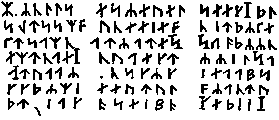
«C’est du runique ;
ces types sont absolument identiques à ceux du manuscrit de Snorre Turleson ! «
.Latin: «In Sneffels Yoculis craterem kem delibat umbra Scartaris Julii intra calendas descende, audas viator, et terrestre centrum attinges. Kod feci. Arne Saknussem.»
–
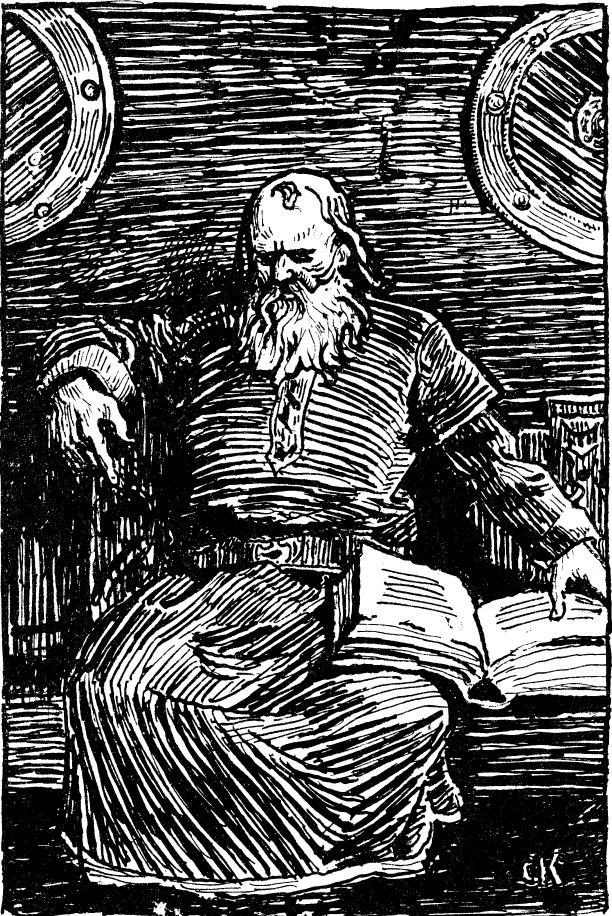
The Sagas according to Snorri
 |
 |
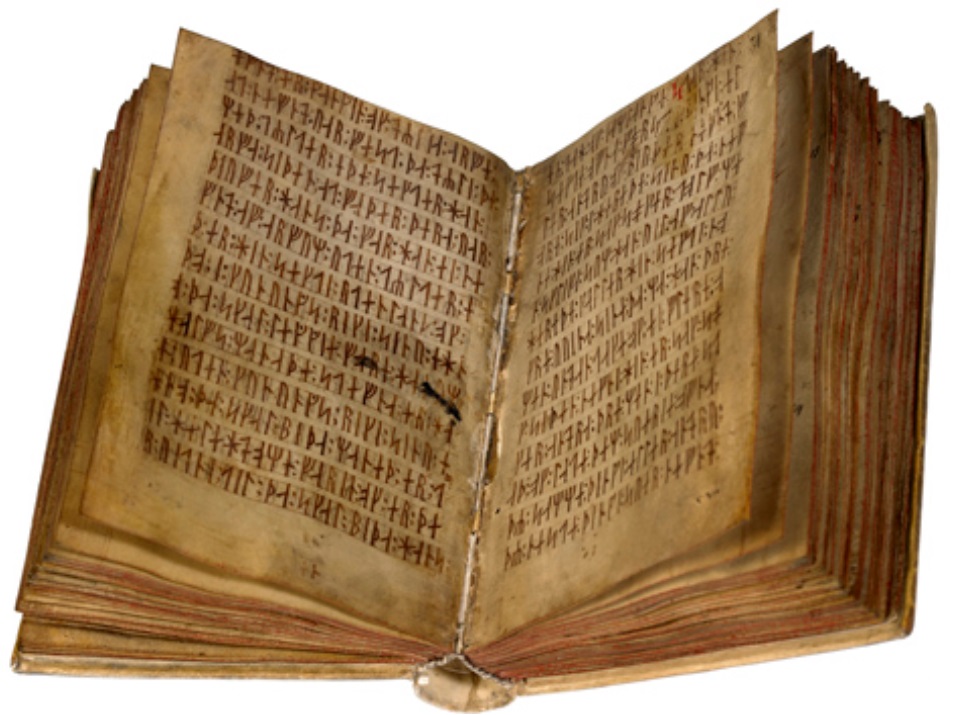 |
# So, evidently, Verne was familiar with the Saga about Norse kings.
.
.
.
.
.
.
:
# Verne also had in-depth knowledge about the ‘Edda’ Sagas
– on Norwegian Lore and Mythology
.
.
Verne (1861 /2004):
Joyeuses Misères de trois voyageurs en Scandinavie (JM)
.
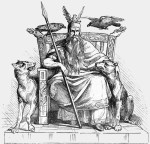
» — La Scandinavie, s’écria-t-il !
Visiter le pays d’Odin, de Thor et de Freyr, «
 .
.  .
. 
Les trois dieux du Wahala [Valhalla] «
.
.
:
.
.
# Verne refers to Greenlanders’ Saga, describing Vikings sailing west,
to ‘Vinland’, Newfoundland and Labrador
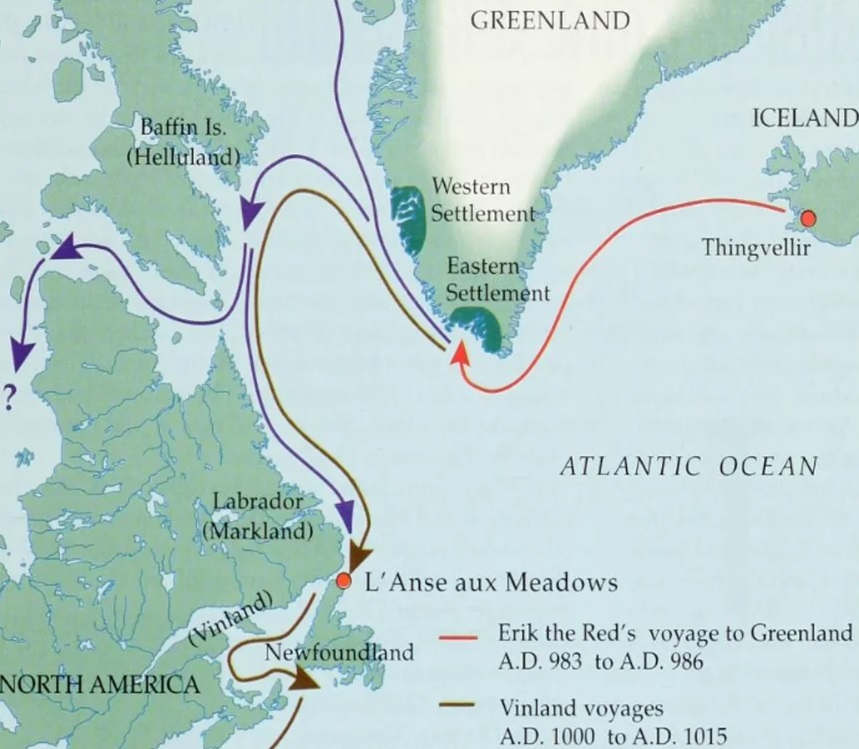
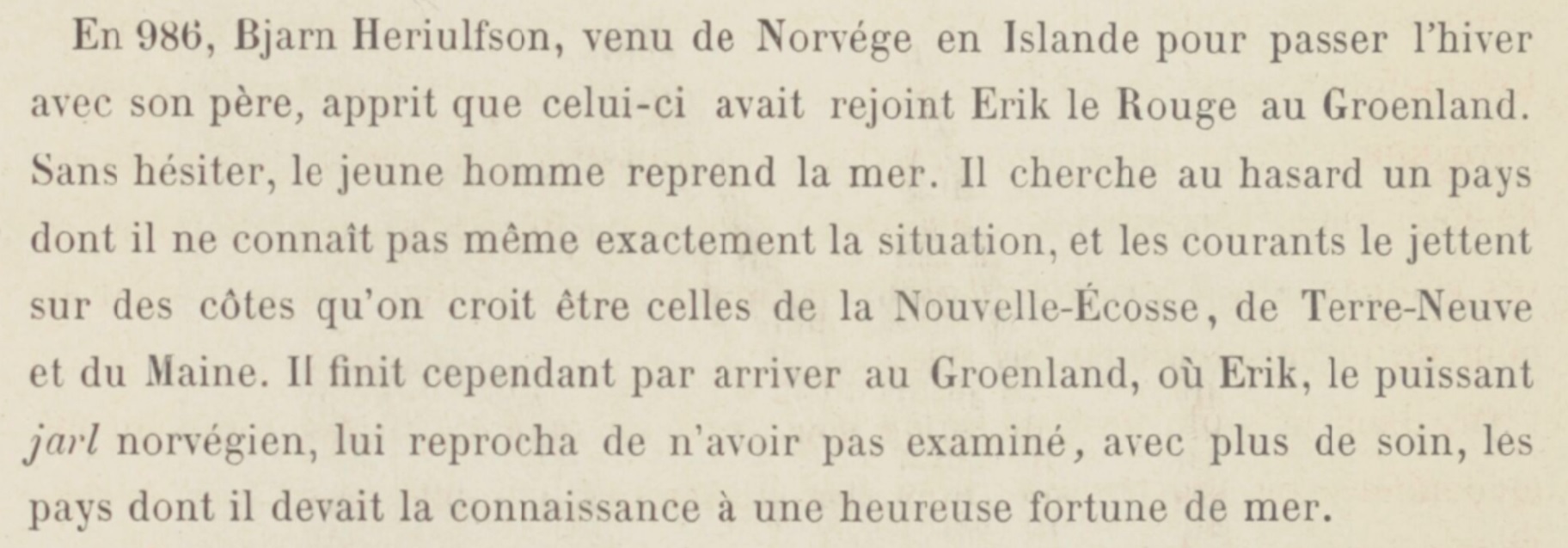
Verne, regarding the Vikings’ and their discovery of ‘Vinland‘:
(«Great explorers» 1864/1870 Chap. III )
«In 986, Bjarn Heriulfson, just over to Iceland from Norway to spend winter
with his father, learned that he had joined ‘Erik the Red’ on Greenland.
Without hesitation, this young fellow went out to sea once more. He just chanced on finding the land without exactly knowing where to search, and eventually sailed along coastlines – one thinks must have been those of ‘Nouvelle-écosse’ [Nova Scotia],
‘Terre-Nueve’ [Newfoundland] and Maine. […] «
.
.
.
:
«Erik [the Red ] had then sent his son Leif, back to the court of the Norwegian King, as there was, at the time, frequent contact between the homeland and it’s colonies «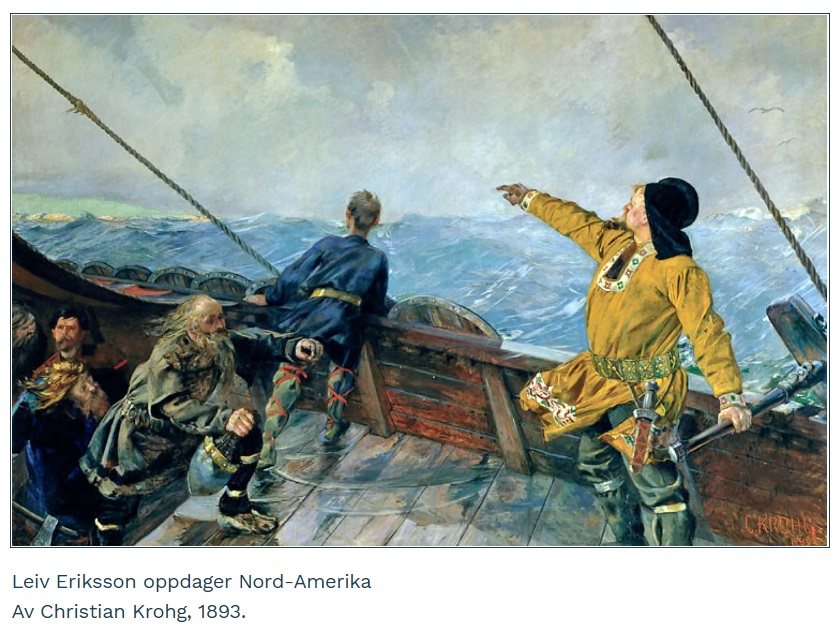 «[ But instead, Leif ] wanted to go for the discoveries of Bjarn, and set out with several ships in search of these new territories that had been spotted. Eventually he landed on some mountainous, desolate, plaines, which he named Helluland,
and to that place we without hesitation recognize as ‘Terre-Neuve’ [Newfoundland] , […]»
.
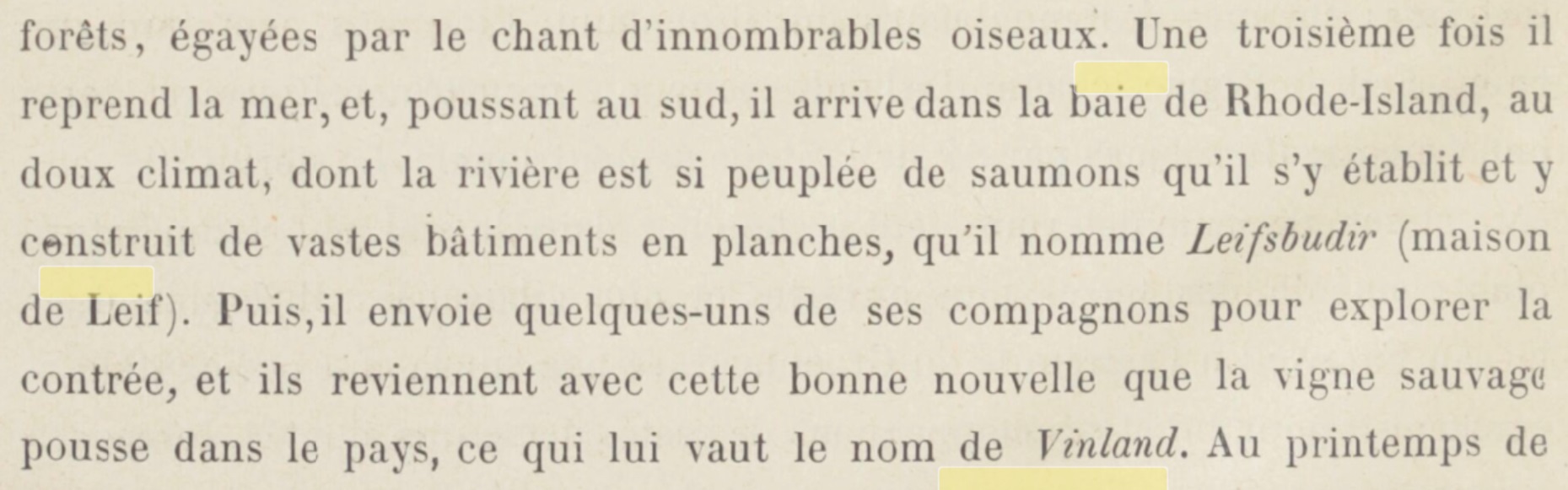 |
Verne:
|
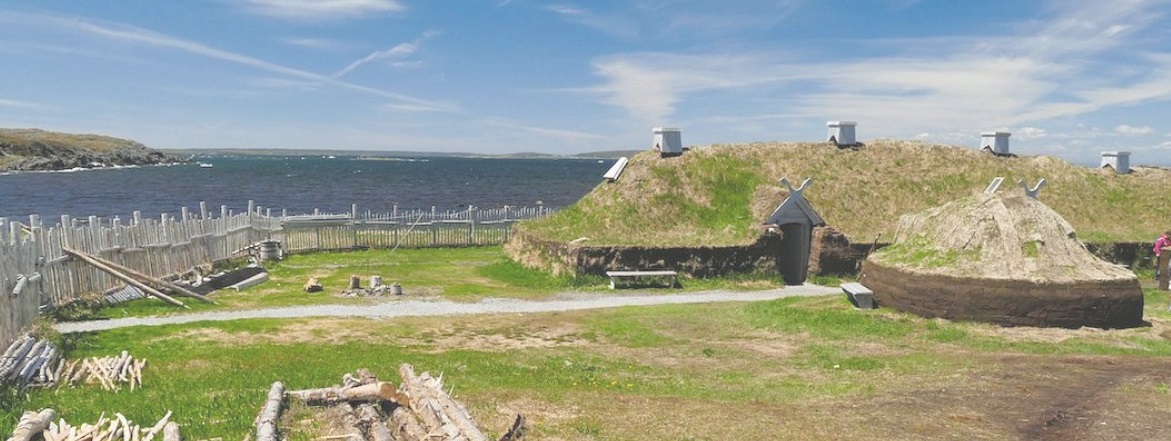
Parks Canada :
L’Anse aux Meadows National Historic Site – Newfoundland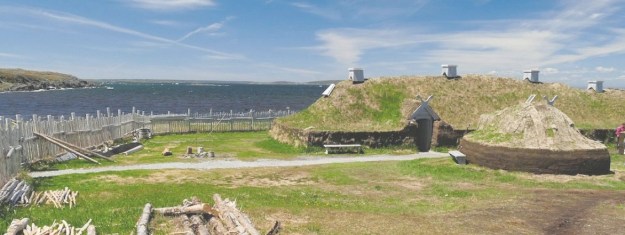
.
.
.
.
Perhaps is this Norse ancestry …
THE reason why
Verne selected to place his character (Le 9672) Ole, the fisherman,
«sur les parages de New Found Land» ?
..….. based in Saint Pierre and Miquelon ?

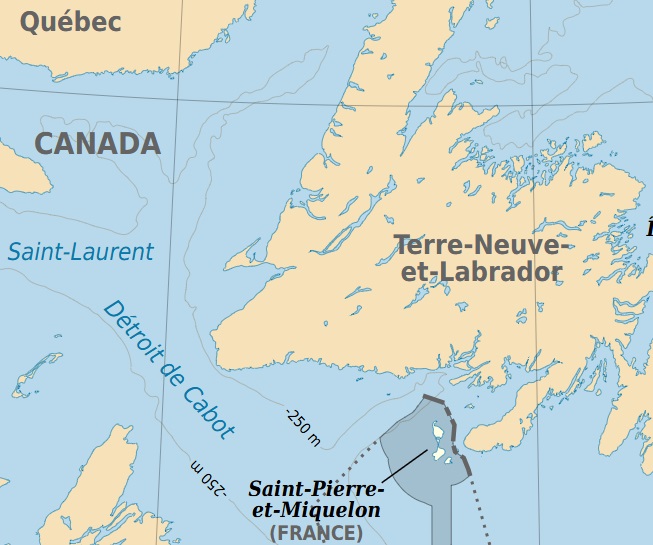
Verne ( Le 9672 ):
«Ole Kamp had been gone for a year. As he had said in his letter
– a tough campaign, these winter fisheries around New Found Land !»
[…]
«The Norwegians have a strong heritage, by the way.
Their ancestors were intrepid seafarers […]»


.
.
:
xxxxxxxxxxxxxxxxxxxxxxxxxxxxxxxxxxxxxxxxxxxxxxxxxxxxxxx
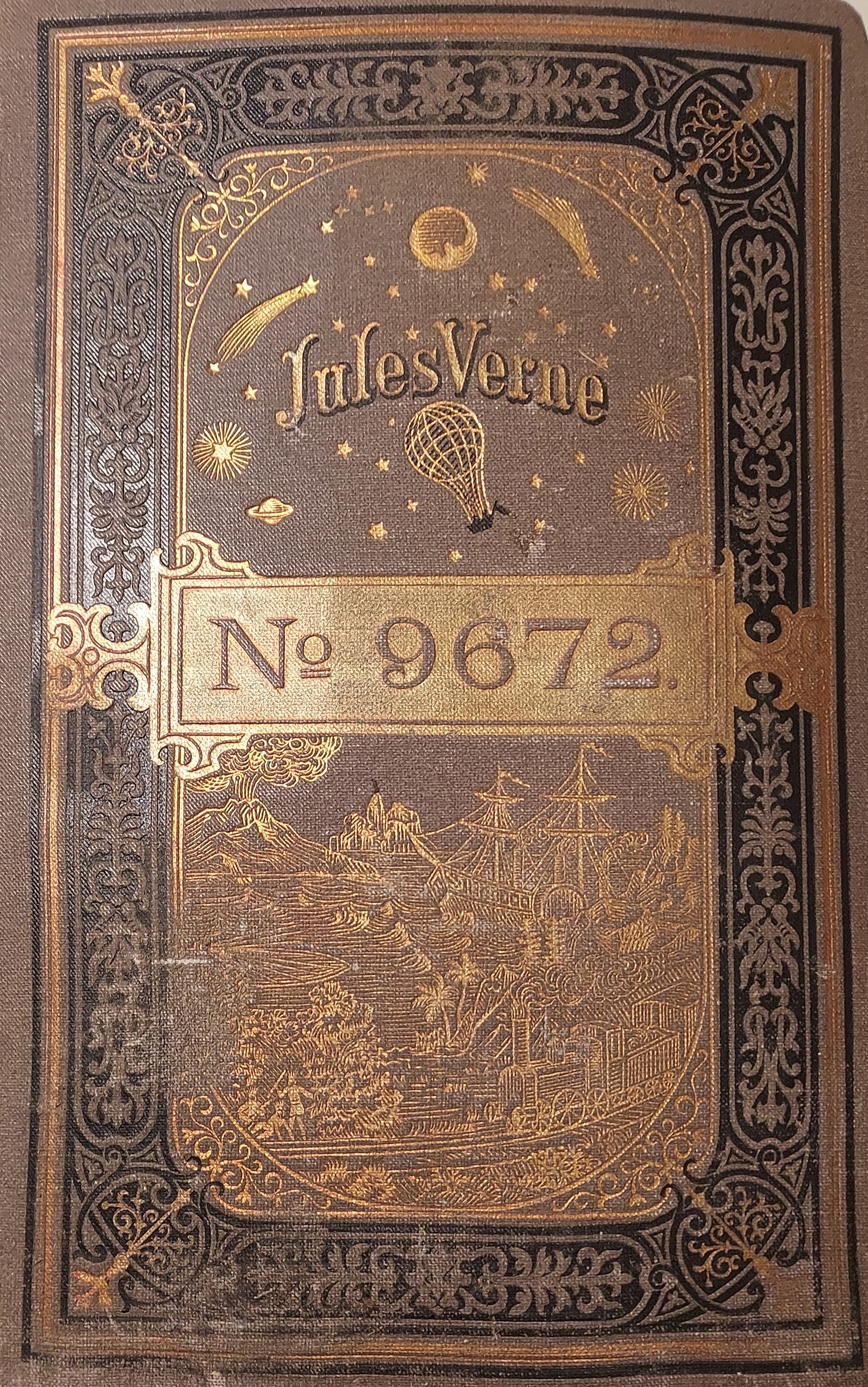
Part 2: Le 9672 . . . . . . .[ «Lottery Ticket» ]
|
|
 Schou, Copenhagen |
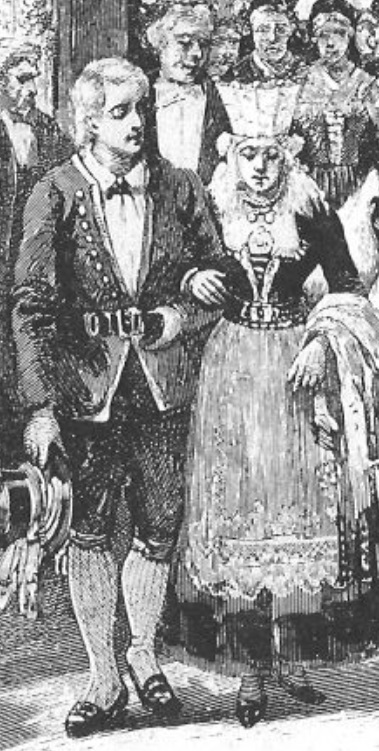

Note:
«Your fiancé,
. . . .. . . . Ole Bendt»
.
Published versions vs Verne’s manuscript
Dè-Hetzelised versions for future readers ?
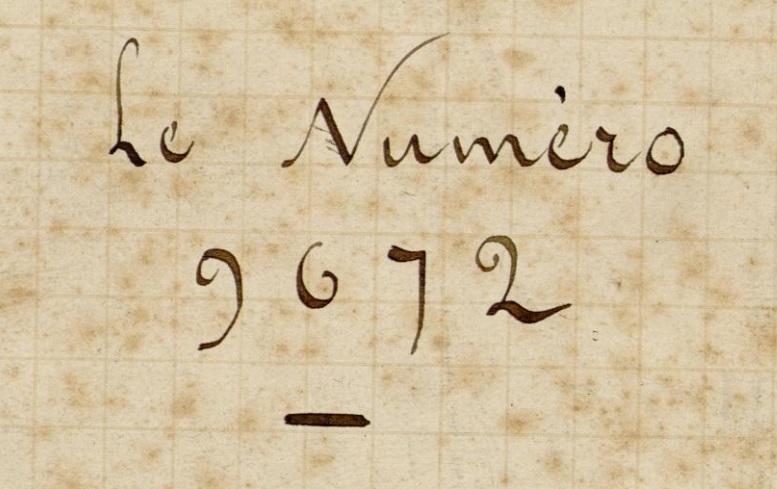
JV original, manuscrit Nantaise
Letter from publisher, during editing:
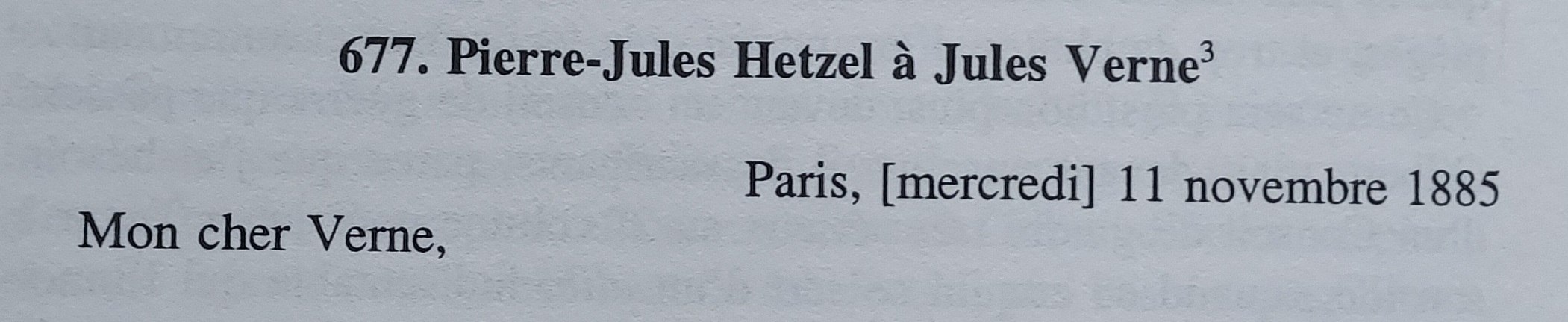
(Correspondance Inédite Verne-Hetzel – 2001)
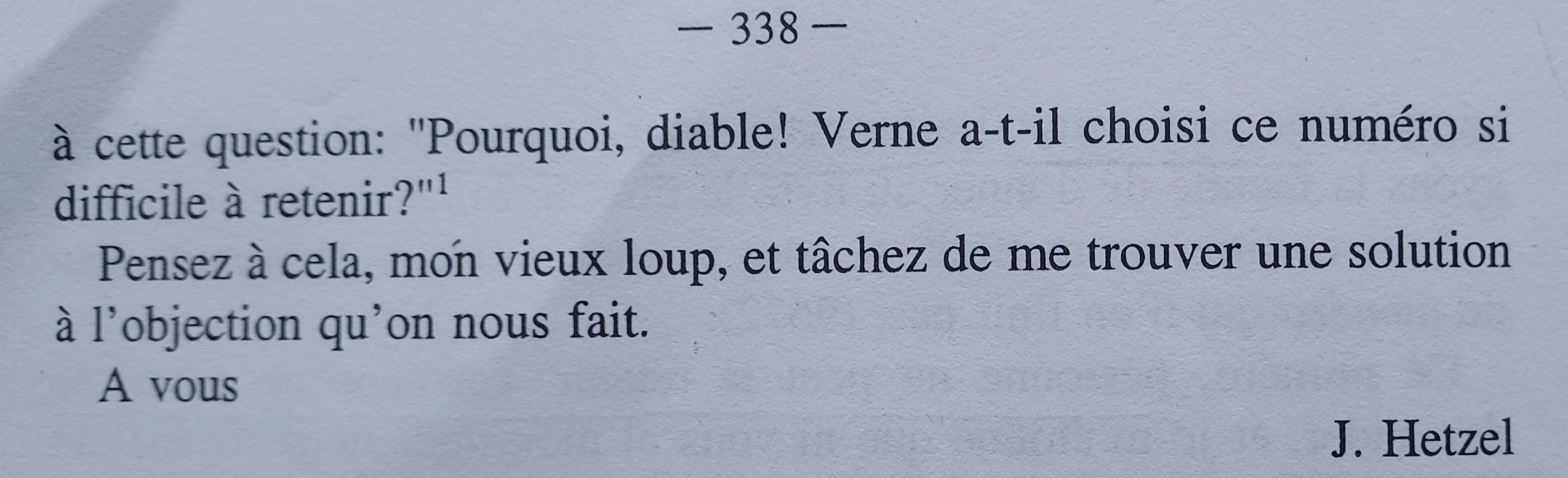
«Pourquoi, diable! Verne, a-t-il choisi ce numéro difficile à retenir»
Yes, WHY ?
And, WHY wait until the mid 1880’ies ?
.
.
.
.
Verne scholars have raised the question
– IS THE TITLE A HIDDEN CODE ?
(Olivier Dumas, Société Jules Verne )
– a date ?
– numbers switched around ? – meaning July or September 1862 ?
# a – date JV met his ‘hero’ Victor Hugo ?
# b – date Verne met Hetzel ?
# c – date for his first contract ?
.
.
.
.
Hypothesis:
# Not only regarding the selected, enigmatic figures: 9-6-7-2
# If a certain meaning is hidden within,
it probably relates to where the novel is set
Suggesting;
that Verne saw the end of Swedish kings’ reign over Norway.
– that political events around 1884 made him decide to start writing
– historically called ‘The 9th of June Resolution’
– an ongoing political ‘liberation’ process, since 1872
.
.
.
FIRST, regarding the Cryptic Title, 9-6-7-2 :
Hetzel thought about sale – publisity – reviews – journalists
Verne was quite persistant, insisting on keeping these exact numbers
– in the end, allowing Hetzel to select a sub title to add,
suggesting:
– ‘un Billet de loterie’
– ‘Un gros lot’
– ‘le numéro gagnant’
– ‘Hulda Hansen’
.
.
.
 .
.
Verne paints this picture of her:
Le 9672 (ch3)

«Seeing her, one readily thought of «Hulda la blonde»,
after whom she was named, and whom Scandinavian mythology allows to wander,
like the happy fairy, around the domestic foyer [hearth]»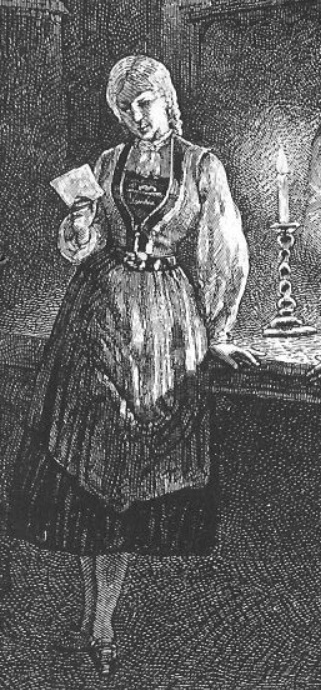
Once again, a LINK to the MYTHOLOGY IN «Edda saga» :
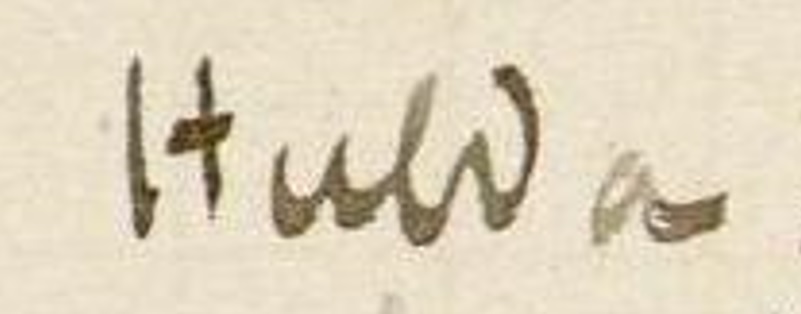
HULDA => derived from: «si huld [a] » ?
– ‘one of the three Godesses of Destiny’
Joyeuses Misères de trois voyageurs en Scandinavie (1861):
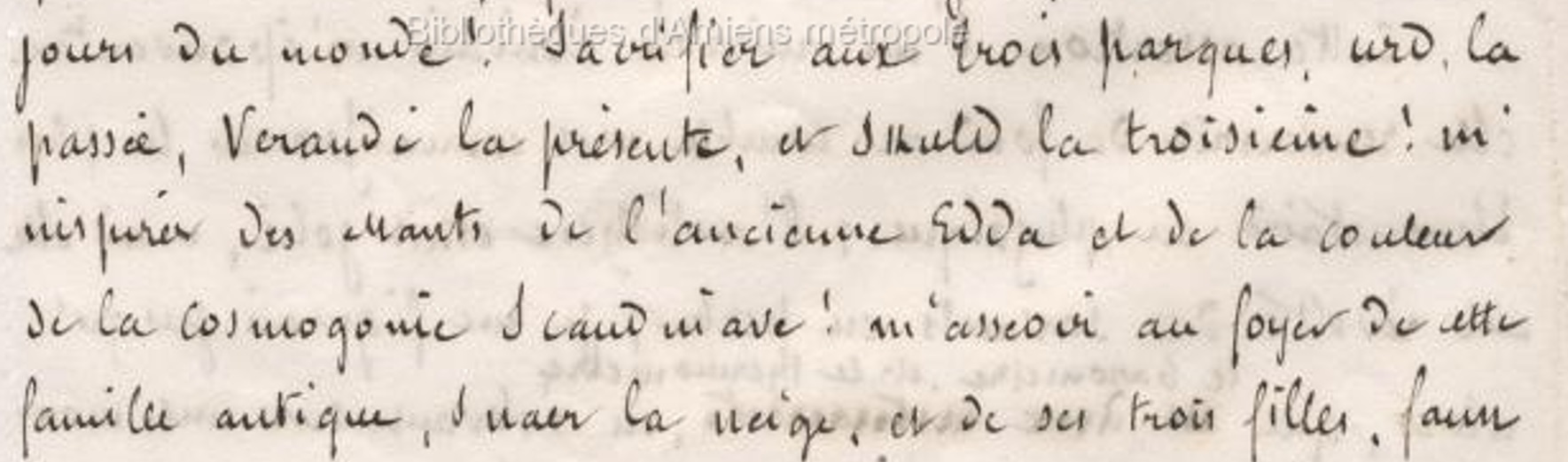
» Sacrifier aux Trois Parques, Urd, la passée, Verandi, la présente, et Sihuld, la troisième !
M’inspirer des chants de l’ancienne Edda et de la couleur de la cosmogonie scandinave ! M’asseoir au foyer de cette famille antique, «
[slightly misspelled => Urd the ‘past’, Verdande the ‘present’ ans SKULD the ‘future’]
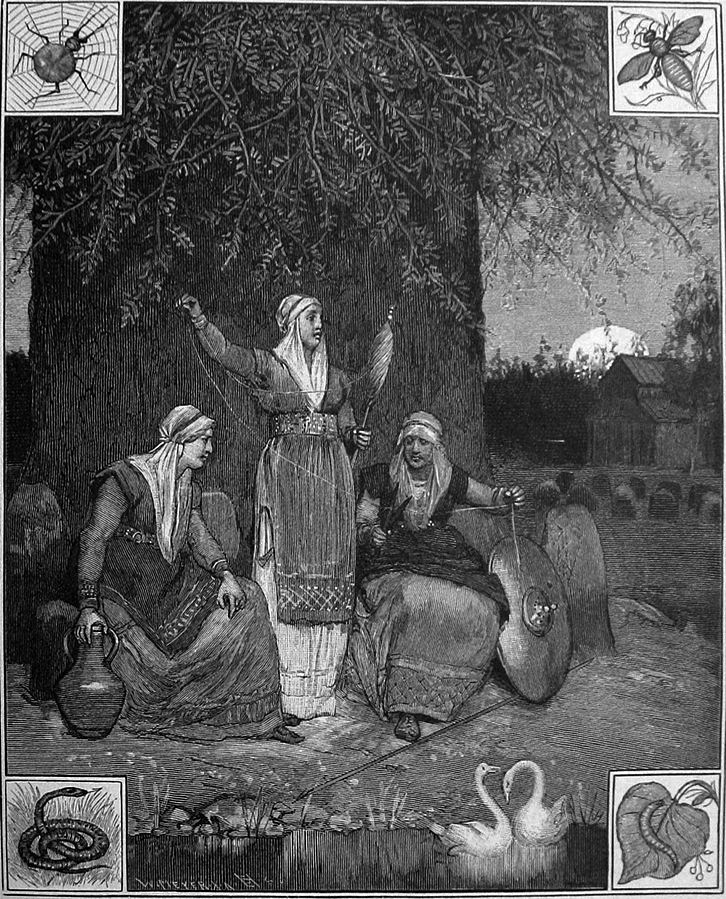 [ ‘Skuld’ [ SiHuld ] & Godesses of Destiny, at the domestic well
Hulda Hansen – important character in novel
BUT the protagonist is Sylvius –
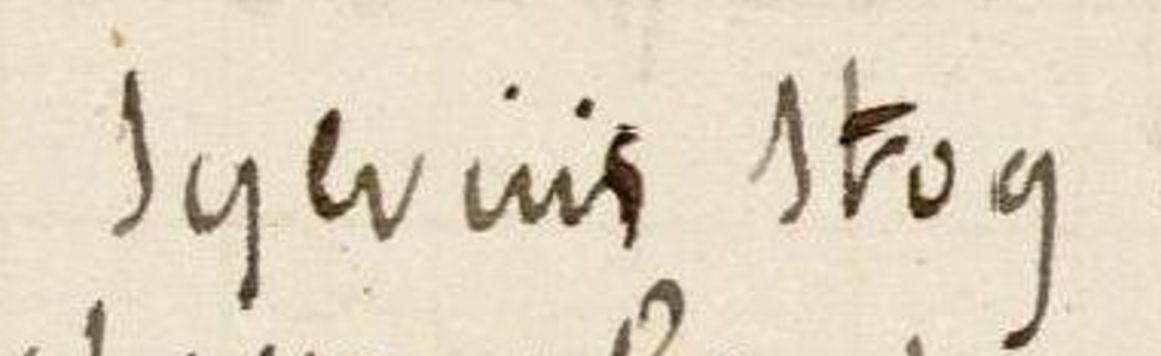
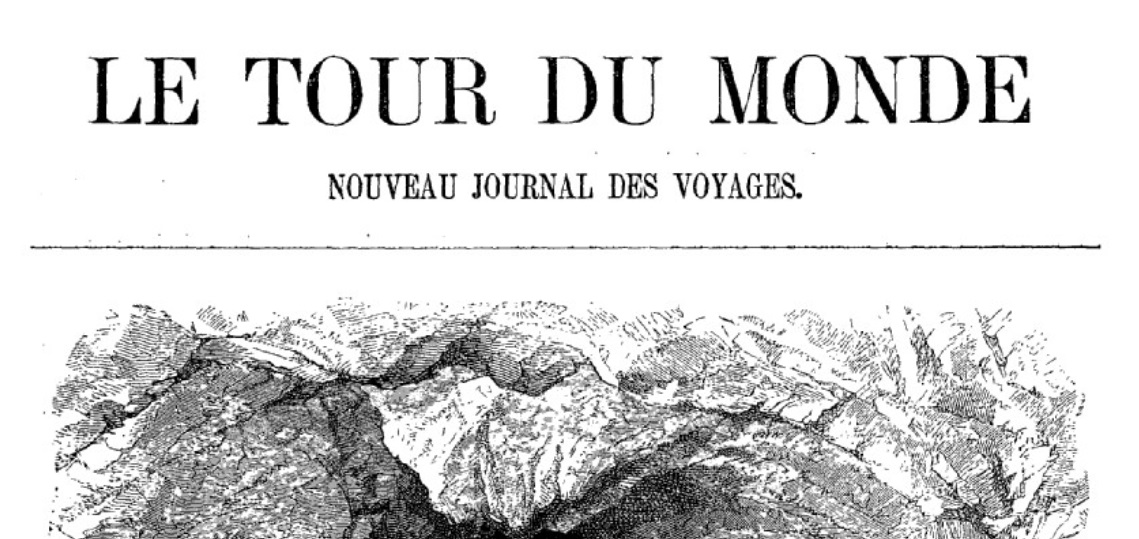
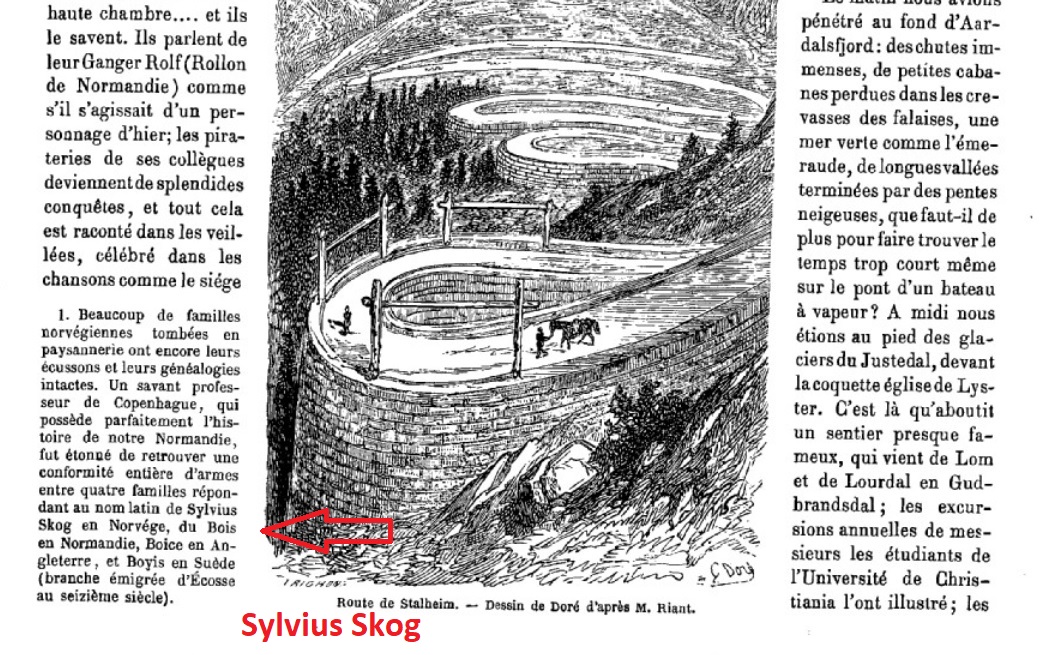
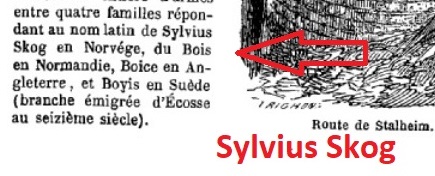
Name, Found in French Magazine: Le Tour du Monde (1860)
– printed editions deviate from Verne’s manuscript (Sylvius Hog)
.
.
.
.
.
.
.
In Le 9672, Verne describes the protagonist as Professor of Law:
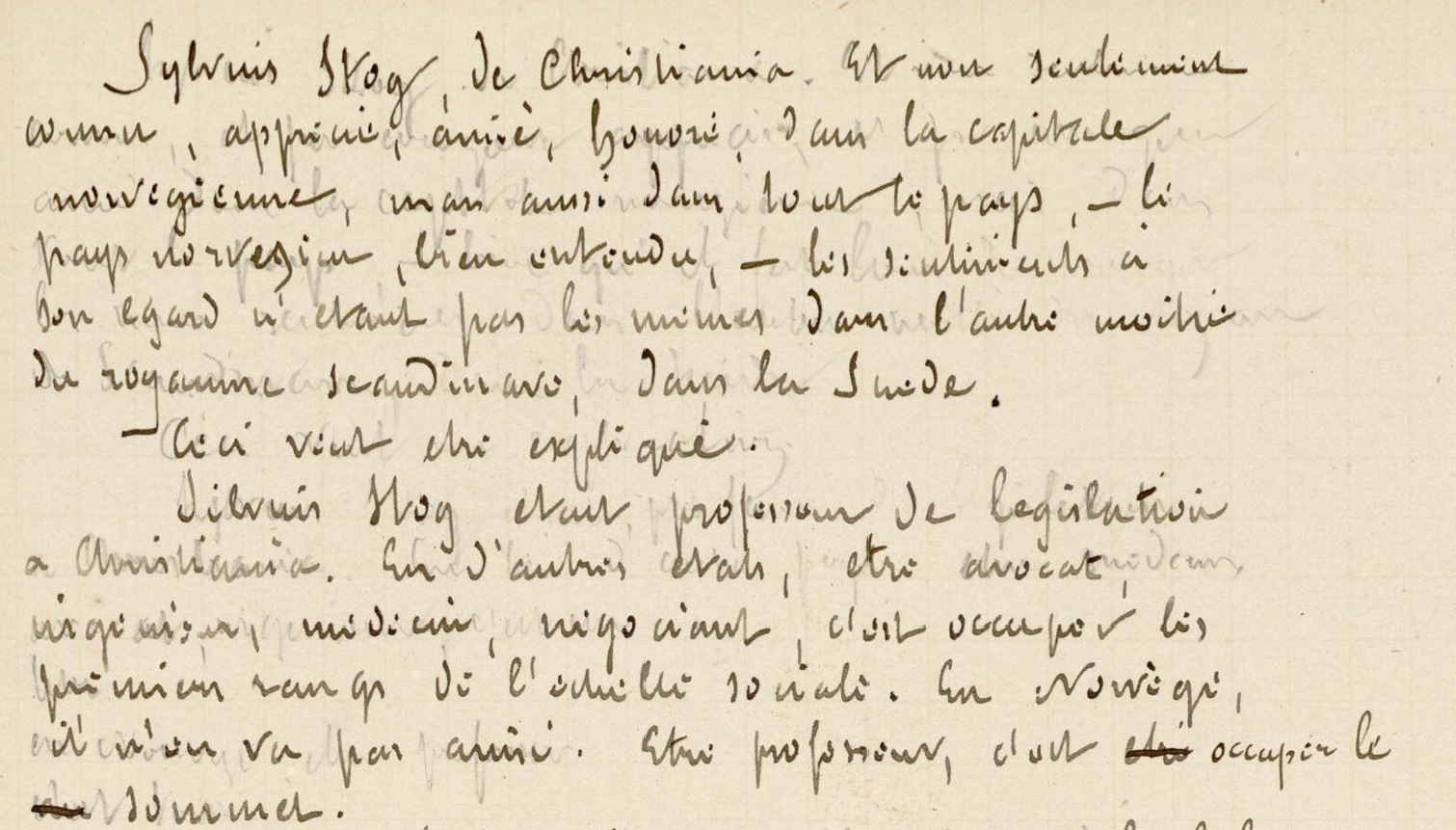
«Sylvius Skog etait professeur de legislation «
Carnet de Voyage 1861

Verne’s Travel Diary while in Scandinavia,
– also describe a Law Professor …
Introduced at Christiania train station – invited on trip to Lake Mjösa
( along with Dr. Carl Wilhelm Boeck – ‘model’ for Dr. Boek in novel )
|
|
|
|

Diary, 21. July, 1861:

» – compagnon professeur m S … de legislation «
.
.
.
.
,
– it appears he is anonymized –
[ similarity in Voyage en Angleterre et en Ecosse ]
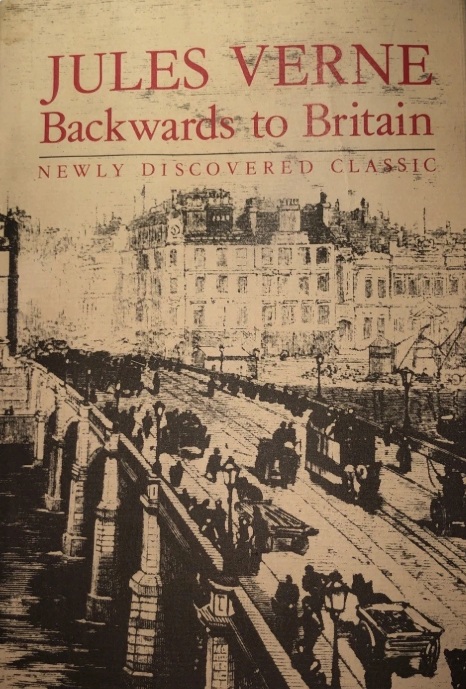 Backwards to Britain (VH 1859/1989) (pub. posthumously)

[ manuscrit Nantaise ]
(according to Prof. Ian Thomson, Glasgow 2011,
this refers to William Smith, later Archbishop Edinburg)
Here in context, Verne’s Diary, Sunday 21. July 1861:
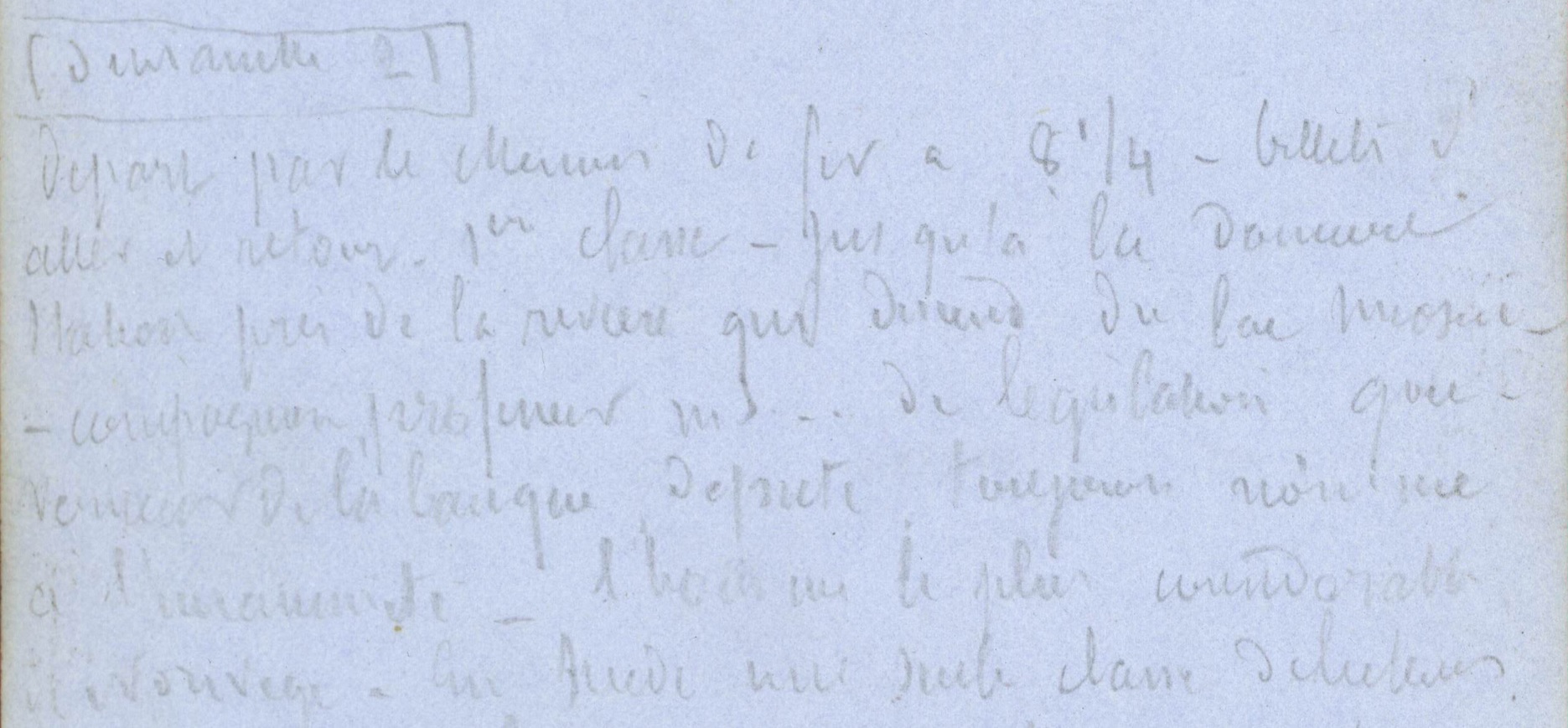
«compagnon professeur m S … de legislation […]
. . . . . . . . . . . . . . . l’homme le plus considerable en Norvège«
Novel, Le 9672 (1886) :

«the professor, being one of the most considerable men i Norway
it is not surprising he was also a member of Parliament [ Storthing ]«
.
.
:
:
.
Further, close reading of Verne’s diary, shows:
Entries in Verne’s 1861 Diary, describing this «Professeur m S…»
– match long passages in novel Le 9672 (1886)
Topics for ‘real world’ conversation (1861) with «Professeur m S…»
= repeated identically in Novel
By this; describing fictional character «Professeur Sylvius»
.
.
.
Meaning:
the model for the fictional character in novel,
was THE travelling companion Verne had conversations with …
Who was he?
.
.
.
Examples
Novel 1886 «Le 9672»:



«Such was Sylvius Skog; of an independant character,
had always refused to enter into the Ministry [cabinet]
[ …. defender of all the rights of his land] »
.
:
Diary 1861:
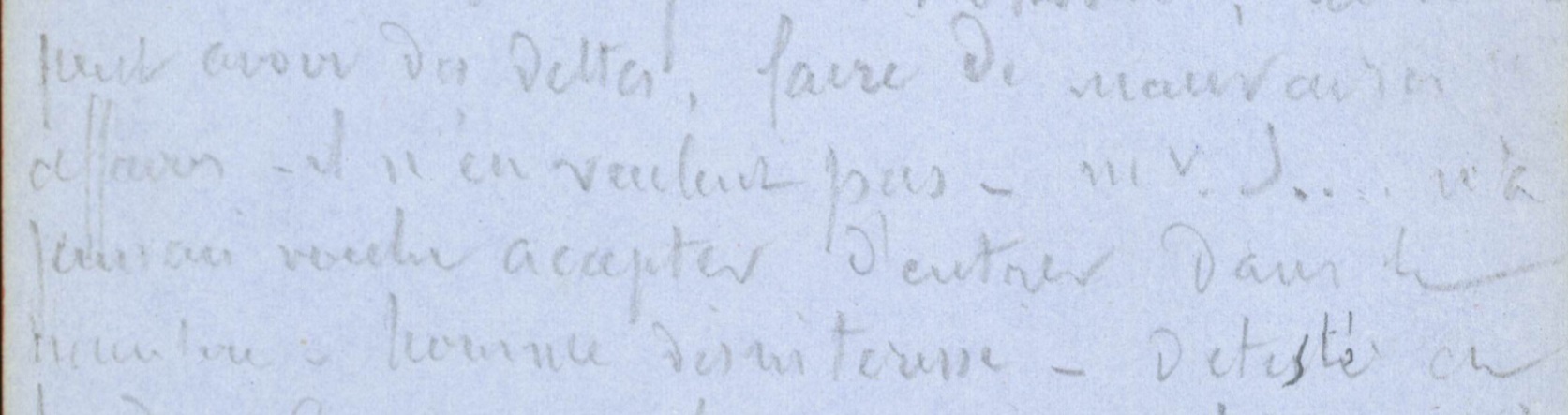
. . . . . . . . . . . . . . . . . . . . . . . . . . . . . . […] faire de mauvaises
affaires il ‘n ‘en voulent pas – mr. S … n’ a
jamais voulez accepter d’ entrer dans le
chambre – homme désintéressée – detestè en [ Suede]
.
..
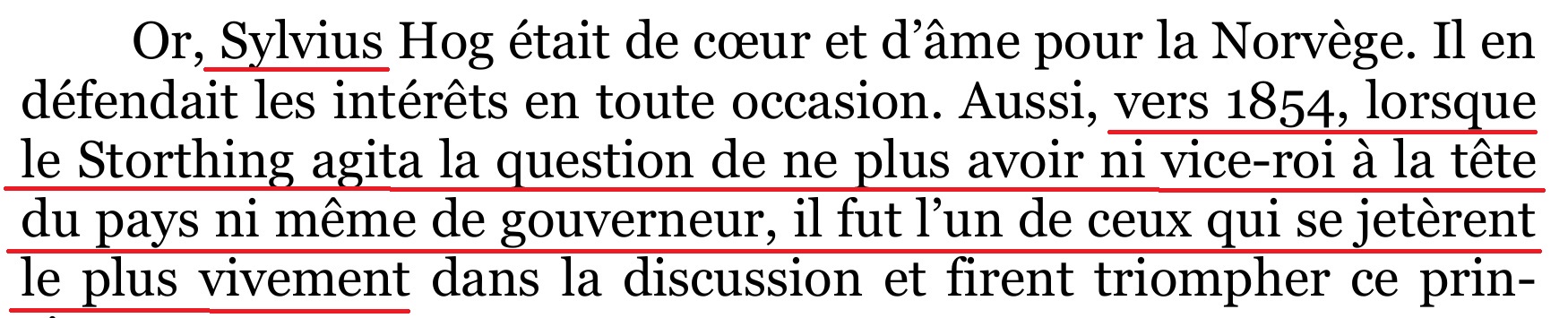
Further descriptions of protagonist in Novel «Le 9672», Professor of Law, Mr. Sylvius,
who was also a Member of Parliament (Storthing),
– makes it possible to indentify,which celebrity Verne met
.
.
..
.
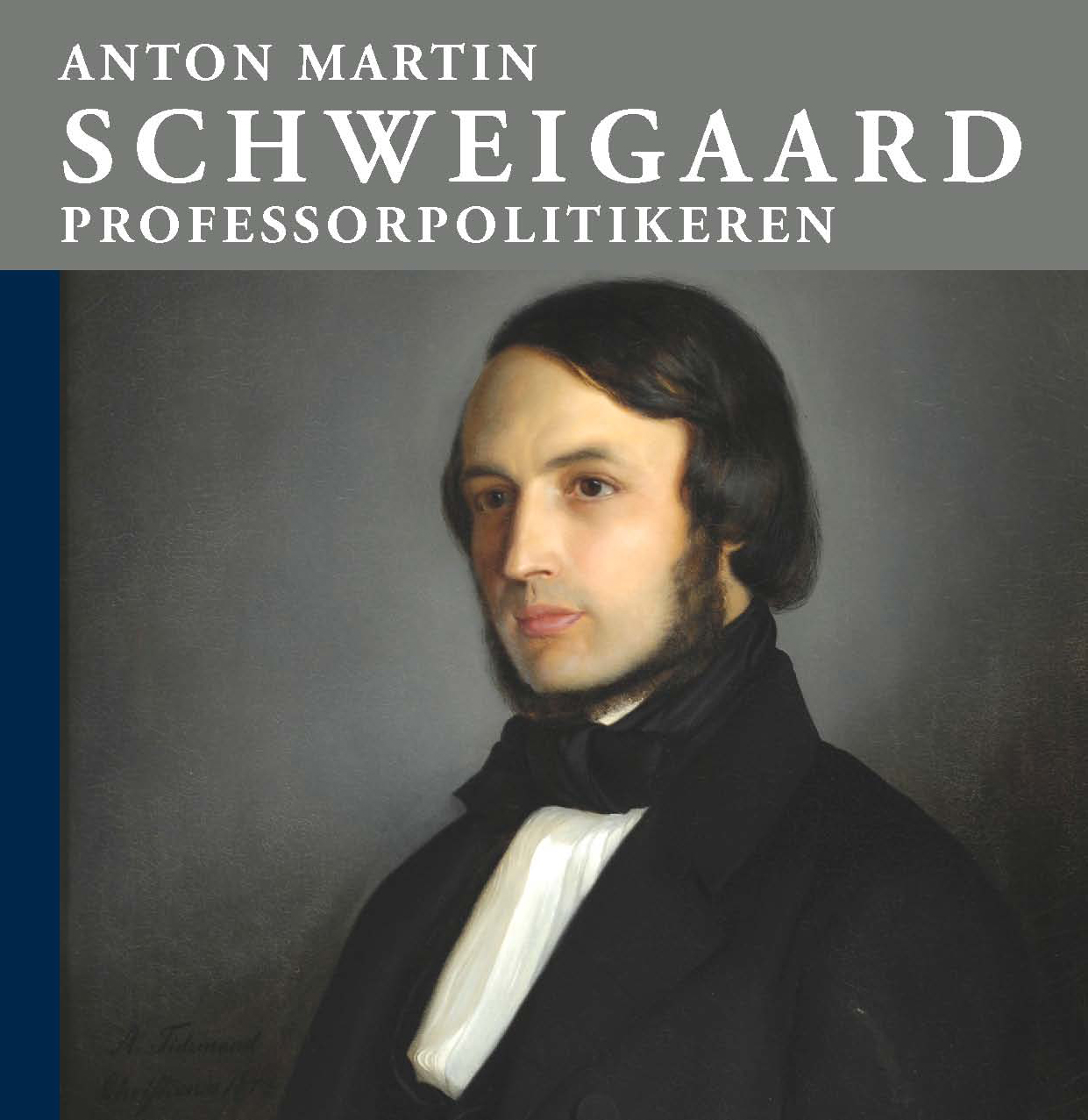
Biografi
Anton Martin Schweigaard (1808-1870).
Professor of Law, Member of Parliament, fluid in French
Considered the most important politician in Norway at the time
Known to refuse repeated offers to enter government
– preferred to stay in Parliament
.
:
:
.
:
AND:
He was active in the ‘vice-roy’ conflict 1854, mentioned in novel
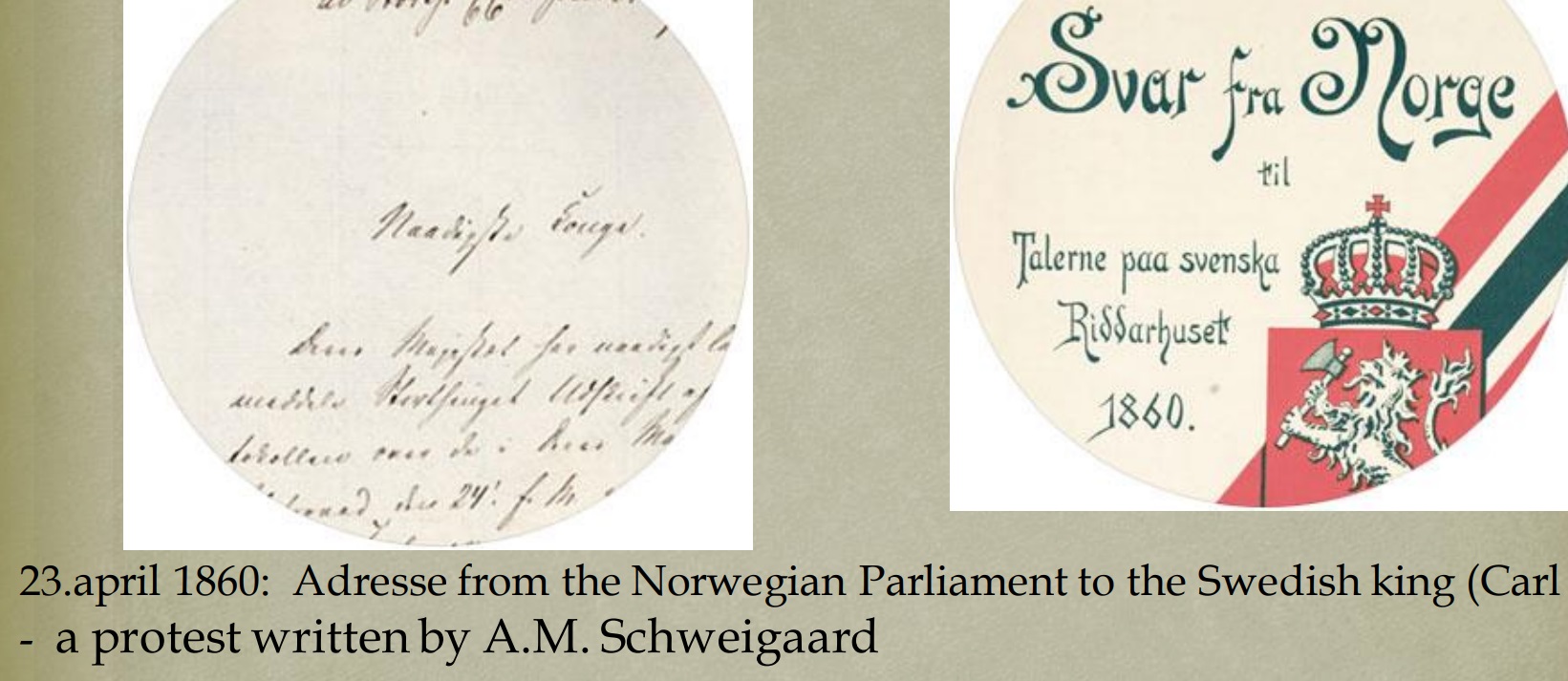
.
Prof. Schweigaard had already been in the frontline
–
Details from conversation – Sunday. July 21 1861,
That ended up in novel Le 9672
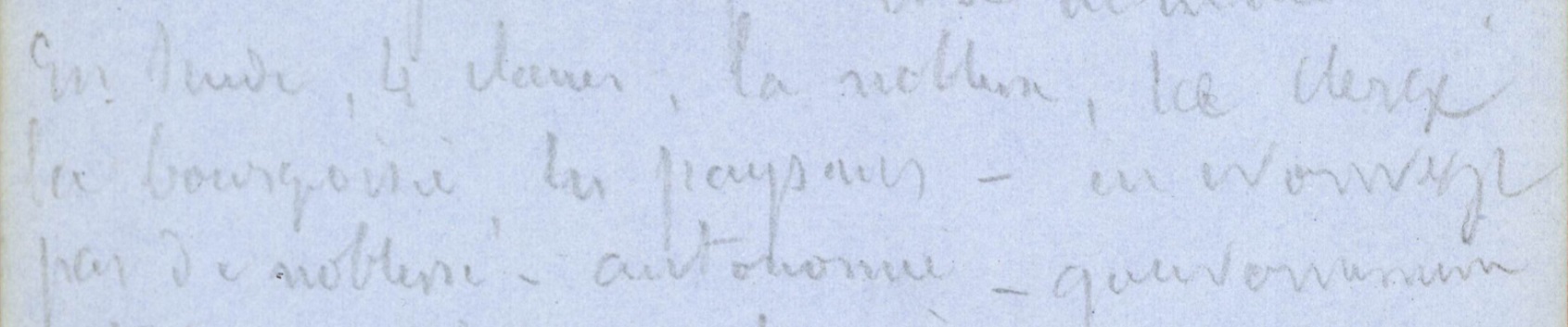
In Sweden, there are four ‘classes’ ….
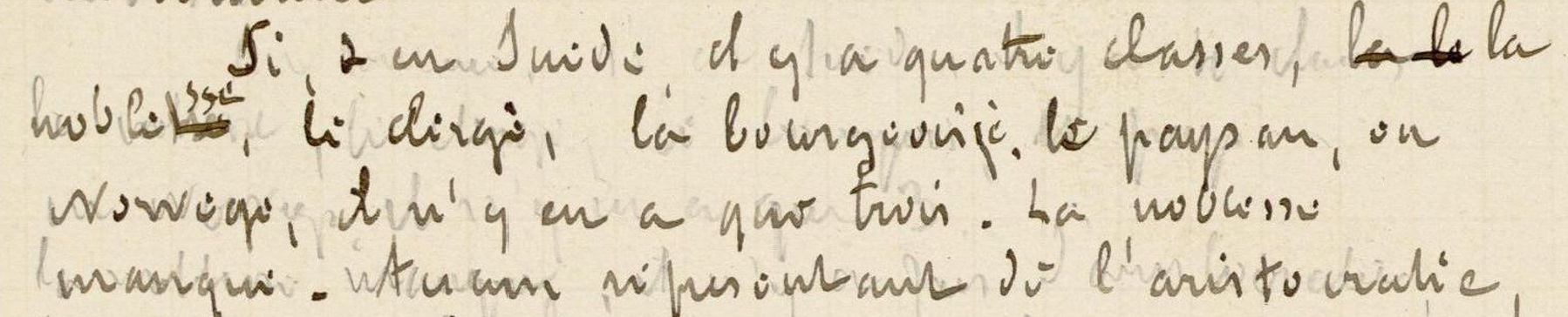
Diary (1861):
 .
.
.
.
:
.
.
:
Novel Le9672 ( BL 1886)
«Swedish king – crowned in Stockholm, later in Drontheim, ancient capital of Norway» …. :

Novel Le9672 (BL 1886),
«Banks in Norway not accepting Swedish money» :

Diary 1861:
Both topics debated during Verne’s conversation with the Norwegian Professor:
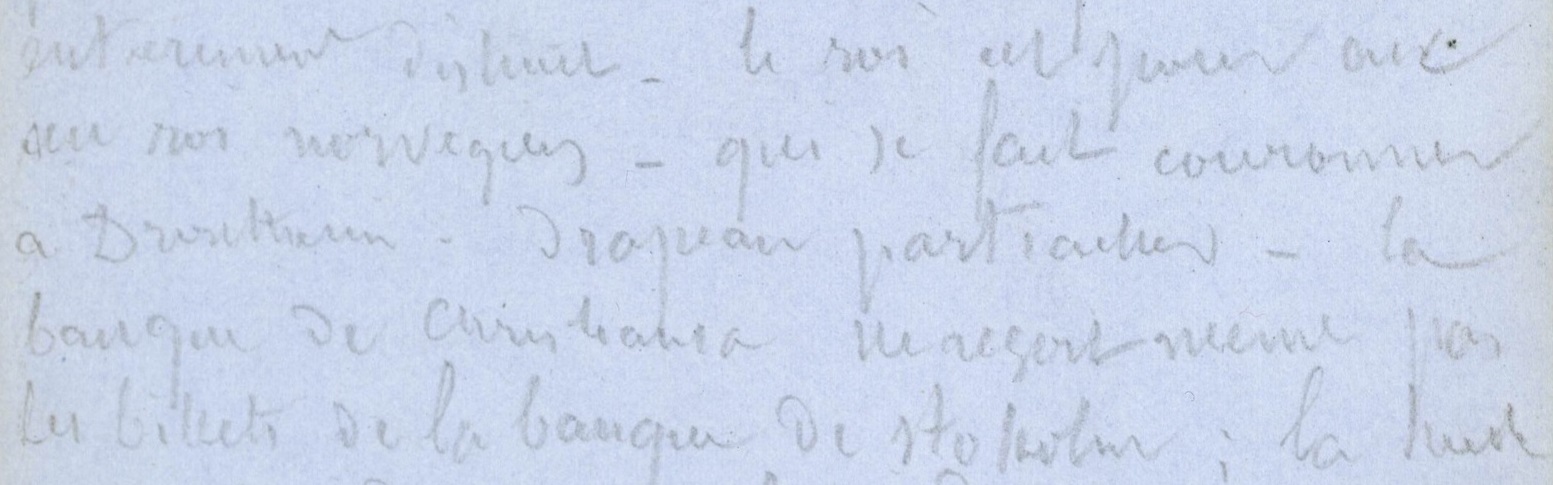 . . . . . . . . . . . . . . . . . .«[…] – the king [of Sweden] also
is Norwegian king – and had also to be crowned
in «Drontheim [Trondheim] – Separate flags – The
bank in Christiania, regrettably don’t
accept bills from the bank of Stockholm»
During dinner, Verne and the professor have further conversations
about politics and relationship Government / Parliament
[ link to transcription, provided at end of presentation ]
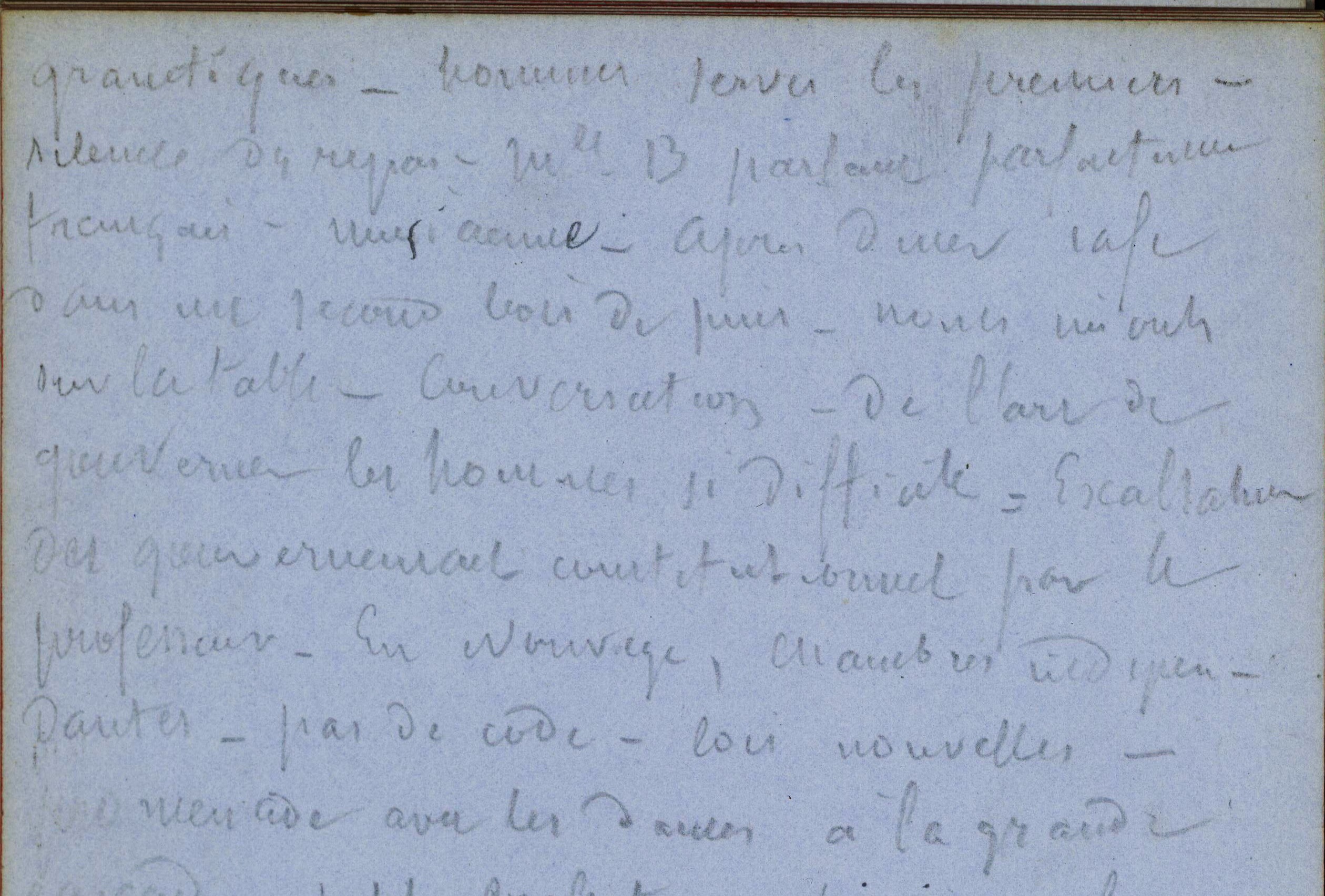
They speak about governmental difficulties
and the independent status of cabinets in Norway
.
..
.
.
.
During the coming years;
this independant status of Government vs Parliament,
evolved into a big conflict inside the Scandinavian Union
– Sweden vs Norway
Le 9672 – Verne in the 1880’ies
Verne novels set in countries with ongoing struggle for independence:
La Maison à vapeur (1880) – India
L’Archipel en feu (1884) – Greece
Mathias Sandorf (1885) – Hungary
Un Billet de loterie (1886) – Norway
Nord contre Sud (1887) – N. America
Le Chemin de France (1887) – France
Famille sans nom (1889 ) – Canada
prof. Jean Chesnaux (1922-2007) :
Une lecture Politique de Jules Verne (Paris, 1971):
«Verne was extremely well informed about the struggles for freedom
and the national sensibilities of the smaller peoples of Europe «
«in all these cases, however, national movements
are mentioned only breafly
in novels with a central theme of a quite different nature»
.
.
.
.
As was the case on the Scandinavia peninsula
Norway & Sweden – a personal union
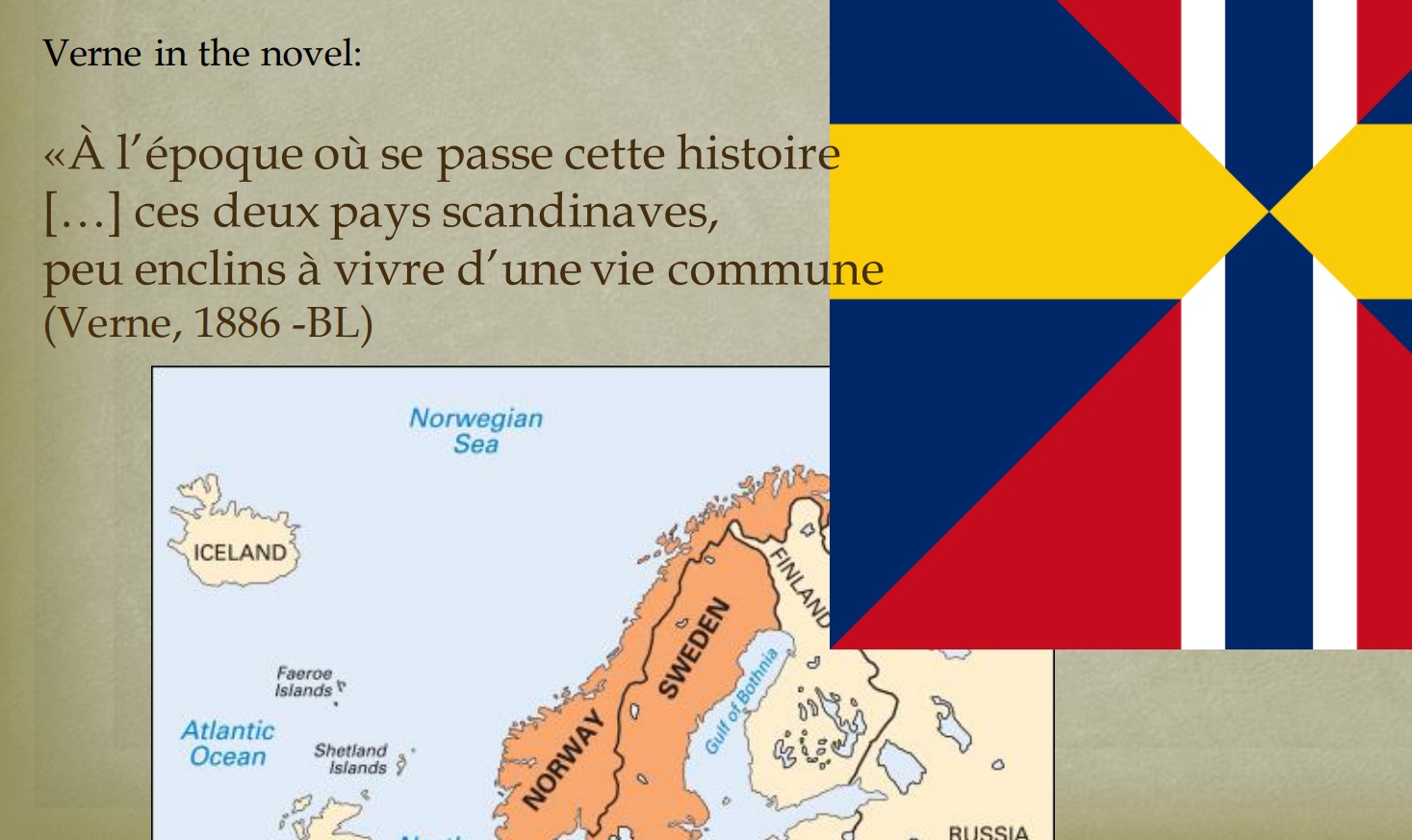
Most readers may find Le 9672 just a romantic story
There is a sub text
Verne’s reason for start writing around 1884-1885 ?
.
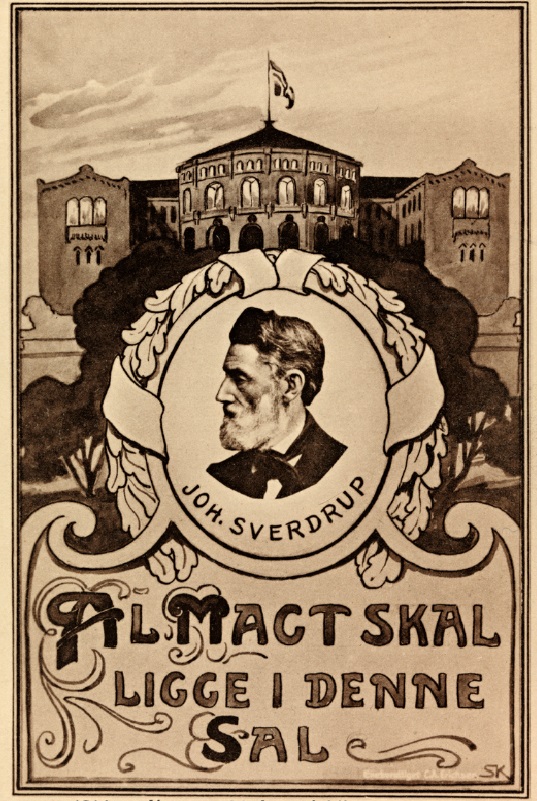
«All power is to be united in this assembly.»
(Sverdrup, 1872)
A growing movement
Towards Parliamentary system of Government
«The 9th of June Resolution»
A long prosess, conflict with the King
The opposition,
Demanded Cabinet ministers must meet in Parliament
.
Verne, could follow it all through French news papers:
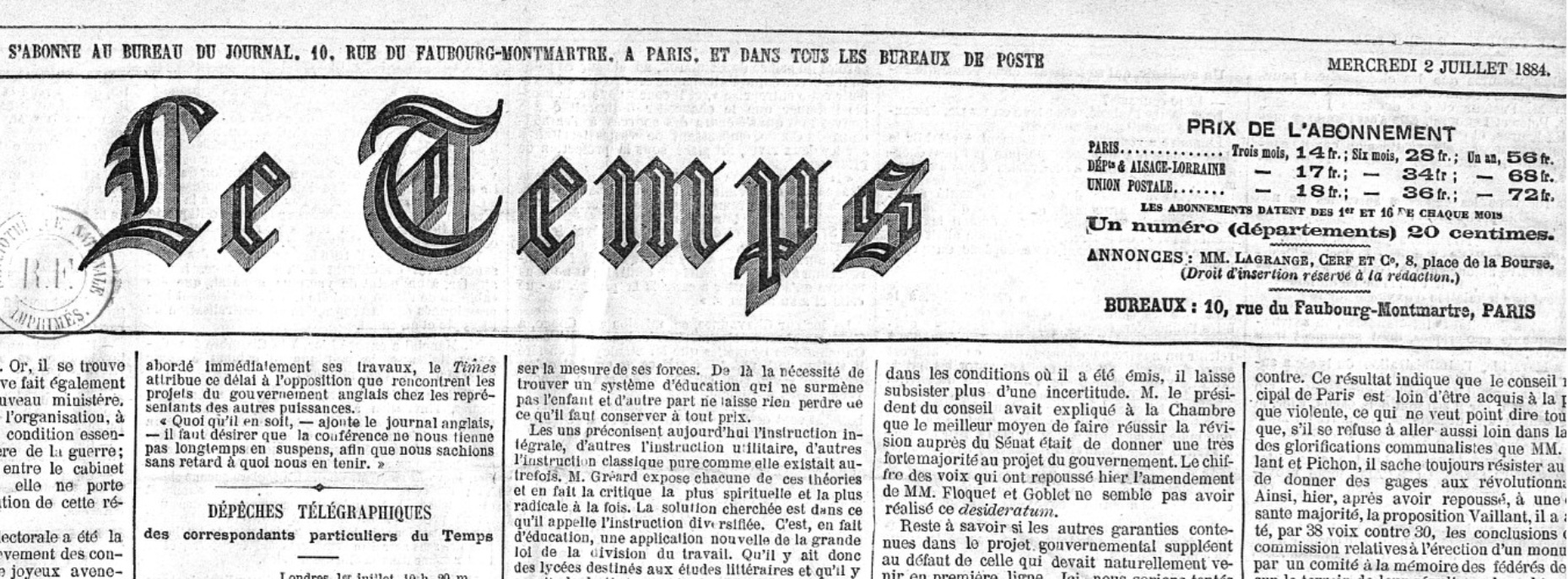
Le Temps 1880:
«Un veritable gouvernement parlamentaire«
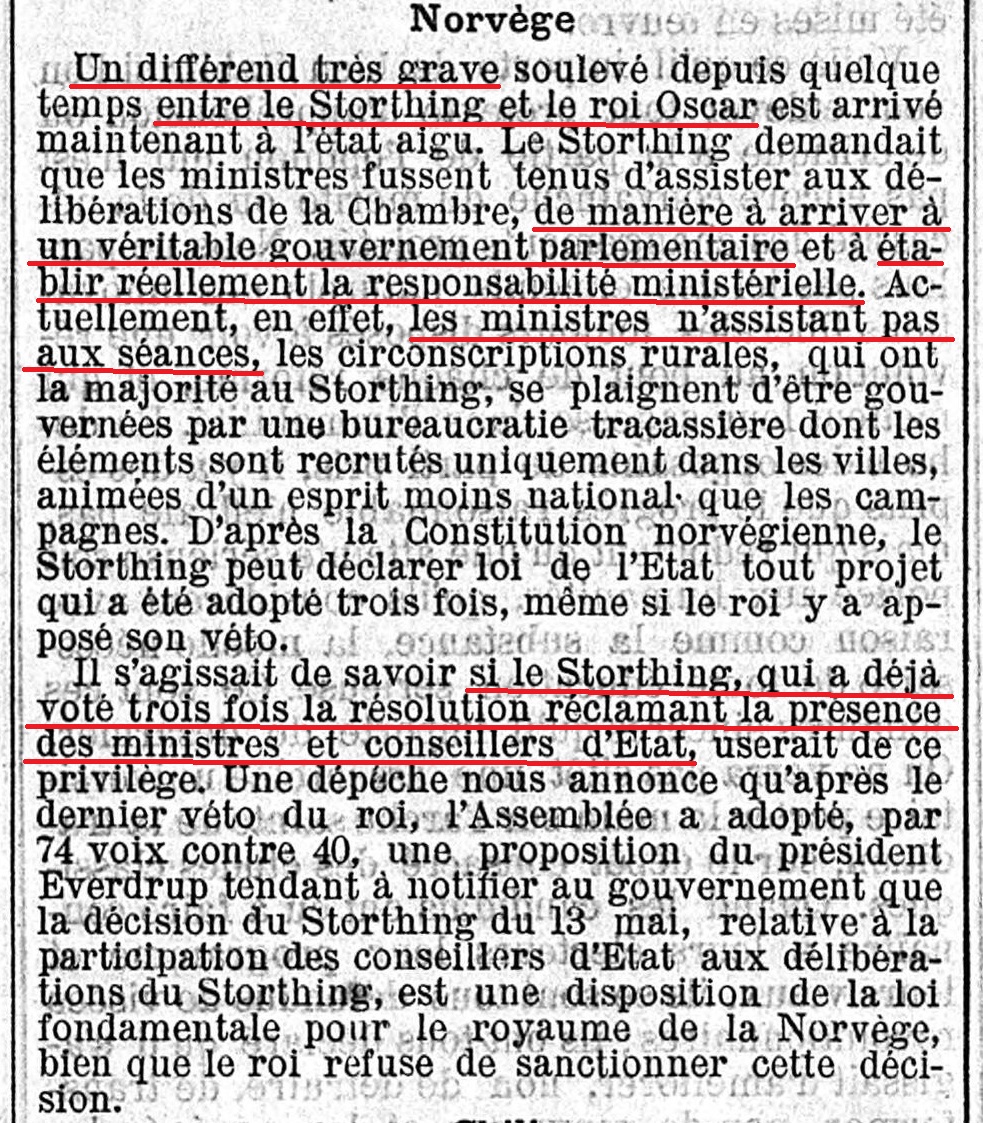
Decision to establish
PARLIAMENTARY SYSTEM OF GOVERNMENT
Le Temps, 1883:
«la rèsolution prise par le Storthing le 9 juin«
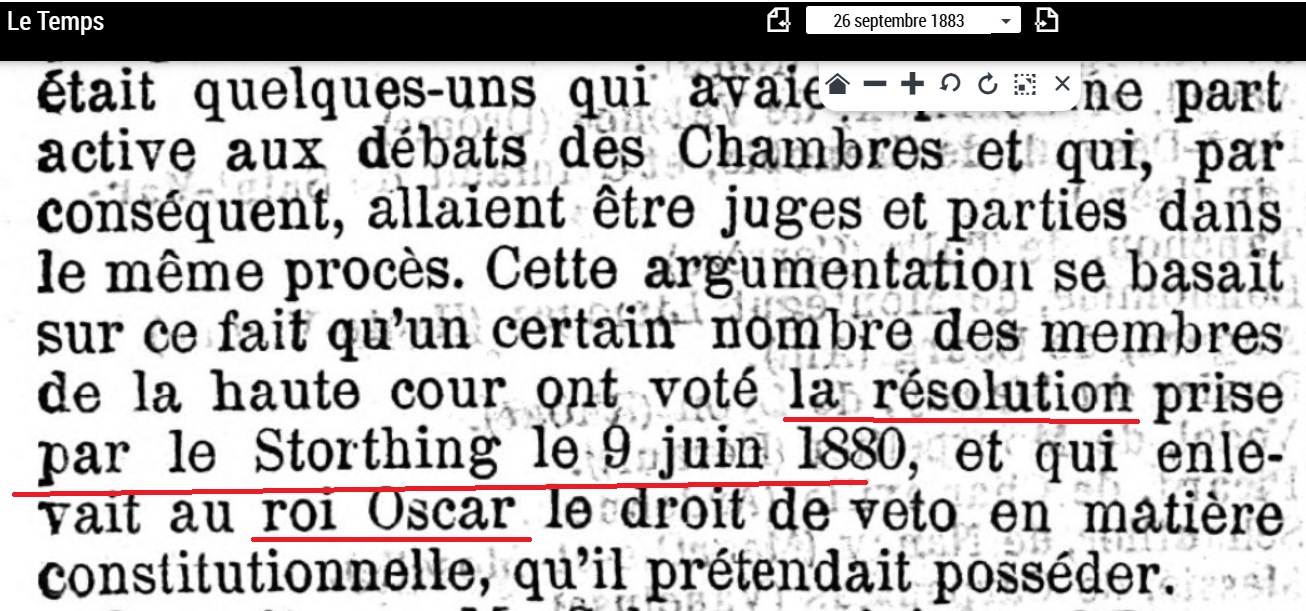
1880 or 1872 – confusion of Years ?
# 9th of June Resolution – constant struggle since 72
1872 – New Swedish king
Oscar II
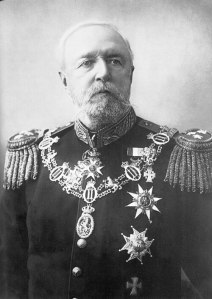
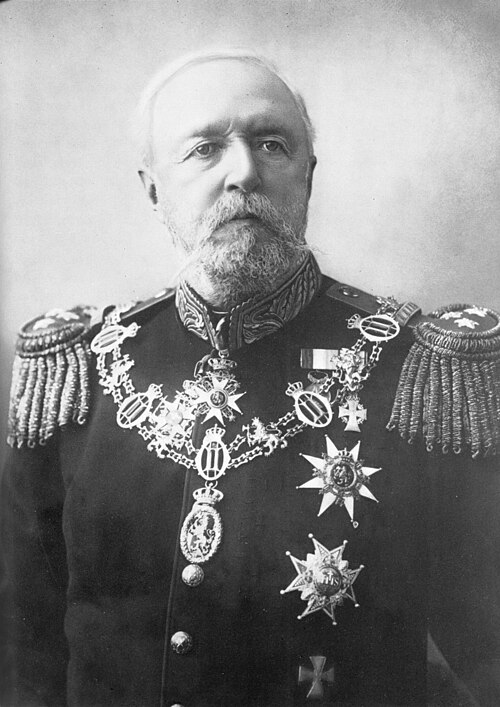
Verne mix/ confuse details ……..
. . . «– «alors Oscar XV » ….. is not historically correct
King in 1861 (Verne’s visit) = Carl XV
King in 1886 (Novel Le9672) = Oscar II
similar «mix up»:
# In Verne’s E.A.Poe essay «Three Sundays in a week», he states:
«La terre […] tourne sur son axis de l’east à l’ouest» [it doesn’t]
# Phileas Fogg’s house number in Savile Row is confused with year :
Sheridan lived in no.14 (not 7) died in 1816 (not 14)
.
.
:
:
Impeachment procedings, delayed implementation
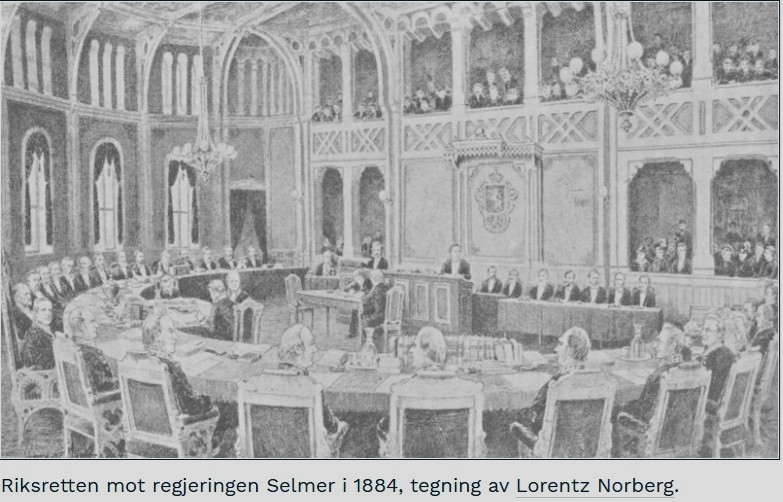
FINALLY in 1884:
A ROYAL APPROBATION OF THE 9th of June Resolution by the Swedish king
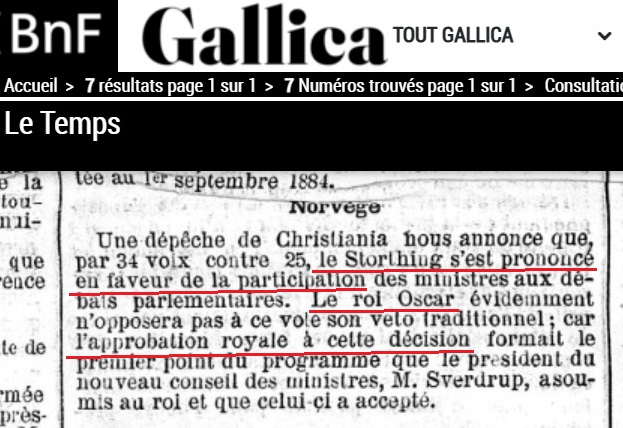
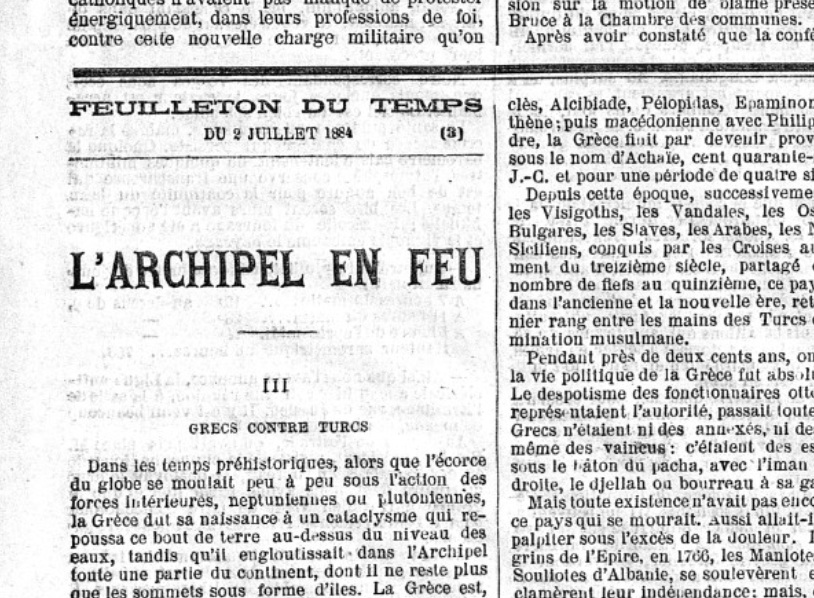
Same issue,
Verne serial on Front Page
.
.
.
.
.
Shortly prior to this,
A Statue erected in honour of Professor Schweigaard
outside University Law building.
The exact same place, where in novel,
drawing of Lottery Ticket took place
Verne, Le 9672:
«cette grande salle de l’Université de Christiania, où allait s’effectuer le tirage de la loterie — et même dans les cours, puisque la grande salle ne pouvait suffire à tant de monde»
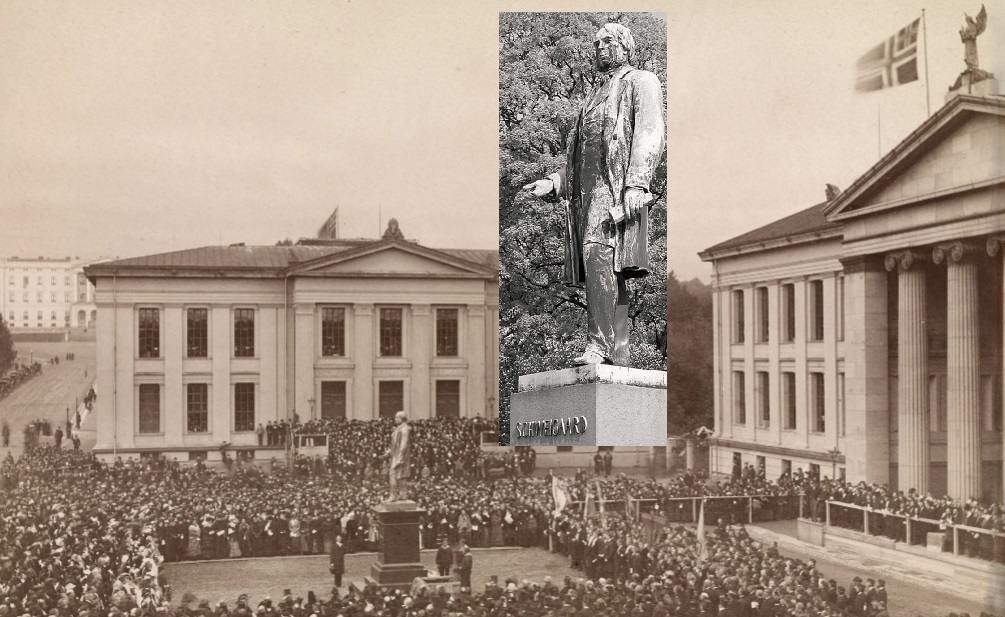
The real world «Le Professeur m S …»
– most famous Member of the Norwegian Parliament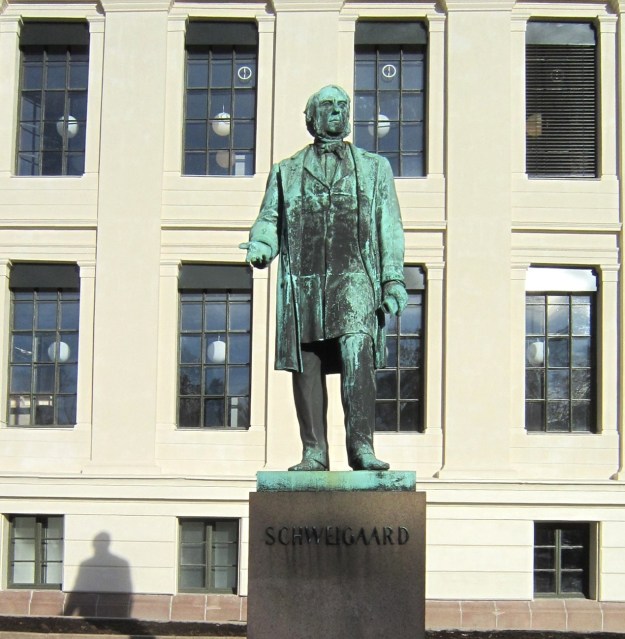
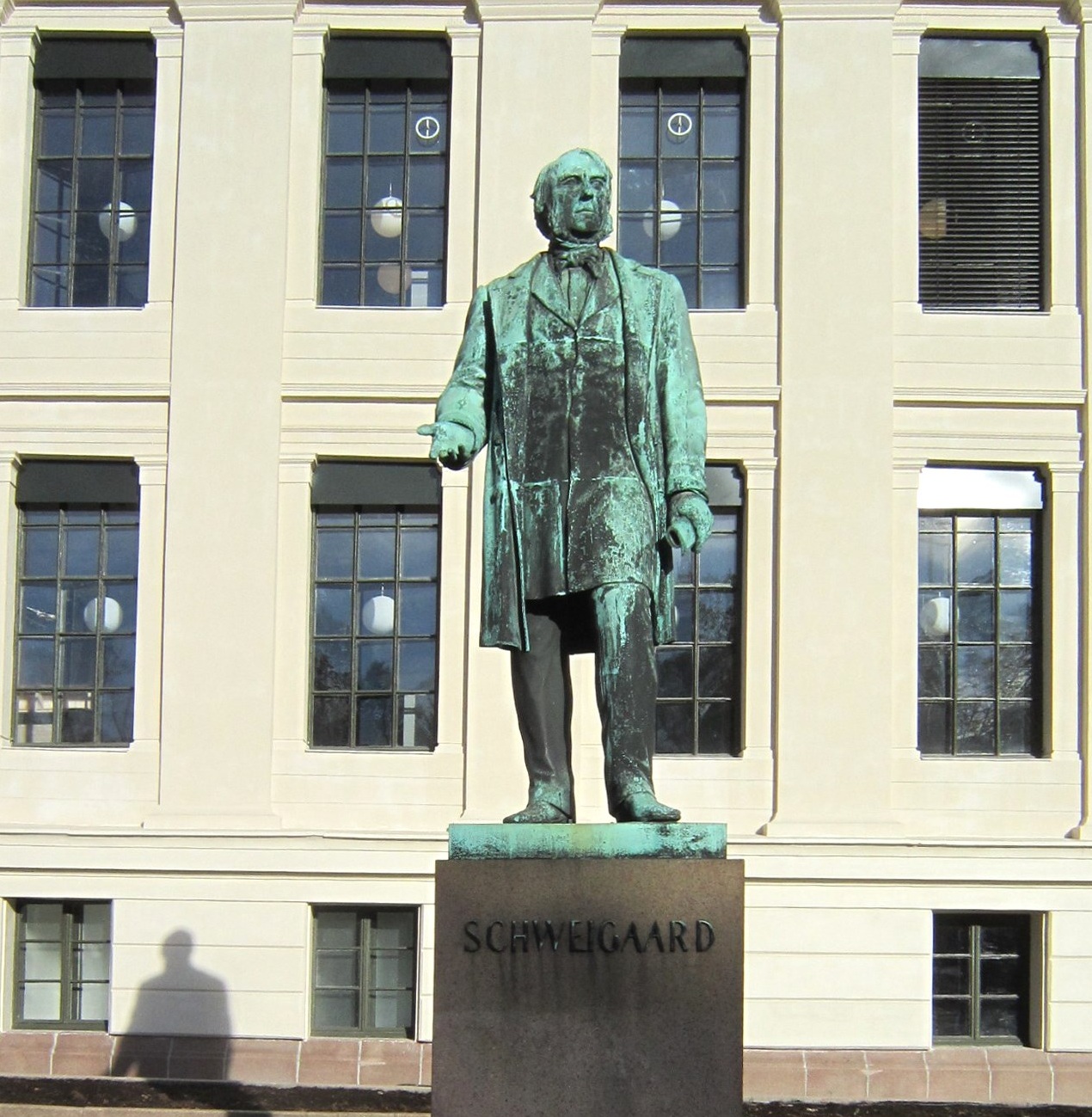
Professeur Monsieur Schweigaard de legislation
Timing: 1884 -1886
+
References to political situation in Scandinavia
— indicate Verne’s reason for starting to write
— indicate a certain subtext
— indicate WHY 9-6-72 became title
9 Juin 1872
1905 – Norway declared it’s independence
– imminent danger of war
At the time of writing, Verne saw possible results
– This could go wrong –
A lottery ?
xxxxxxx
EXPLORE interactice Story Map: [click on image to start]
[ Here, PowPoint/PDF:
PJMoe, NAJVS Toronto 2017: JV in Norway1861 & Billet de Loterie 1886 ]
.
JV Book history – Editions Norway
VISUAL, interactive, TimeLine
Le 9672 as Comic book (Spain 1973 , out of print )
1861 Diary, & Comments julesgverne.com
.
Scandinavian JV Society, PORTAL back online:
julesgverne.com/jvportal
.
 2. Moes bok