Expérience extraordinaire – Jules Verne Conférance

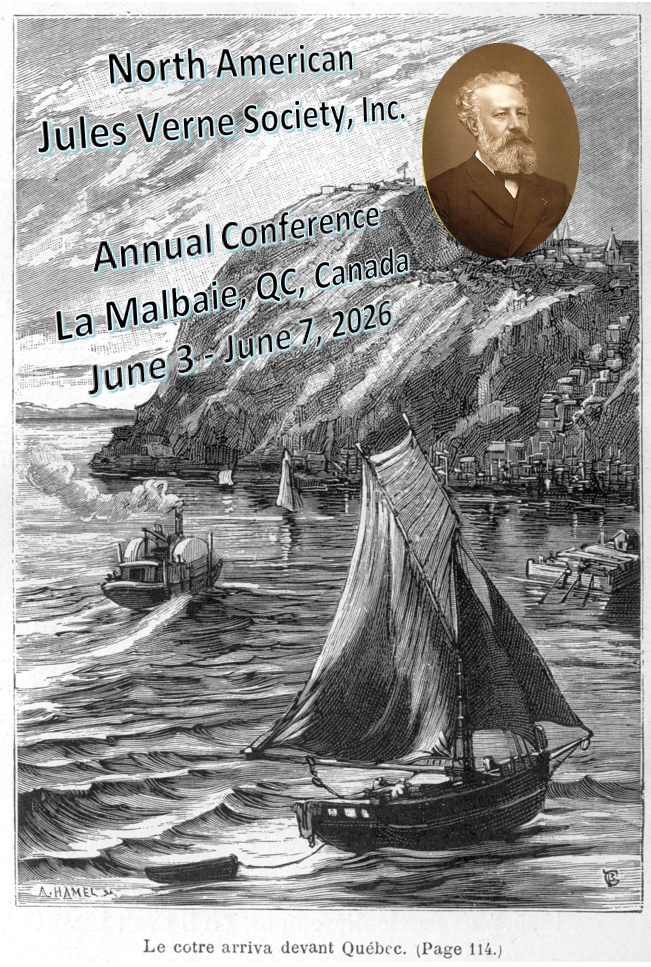
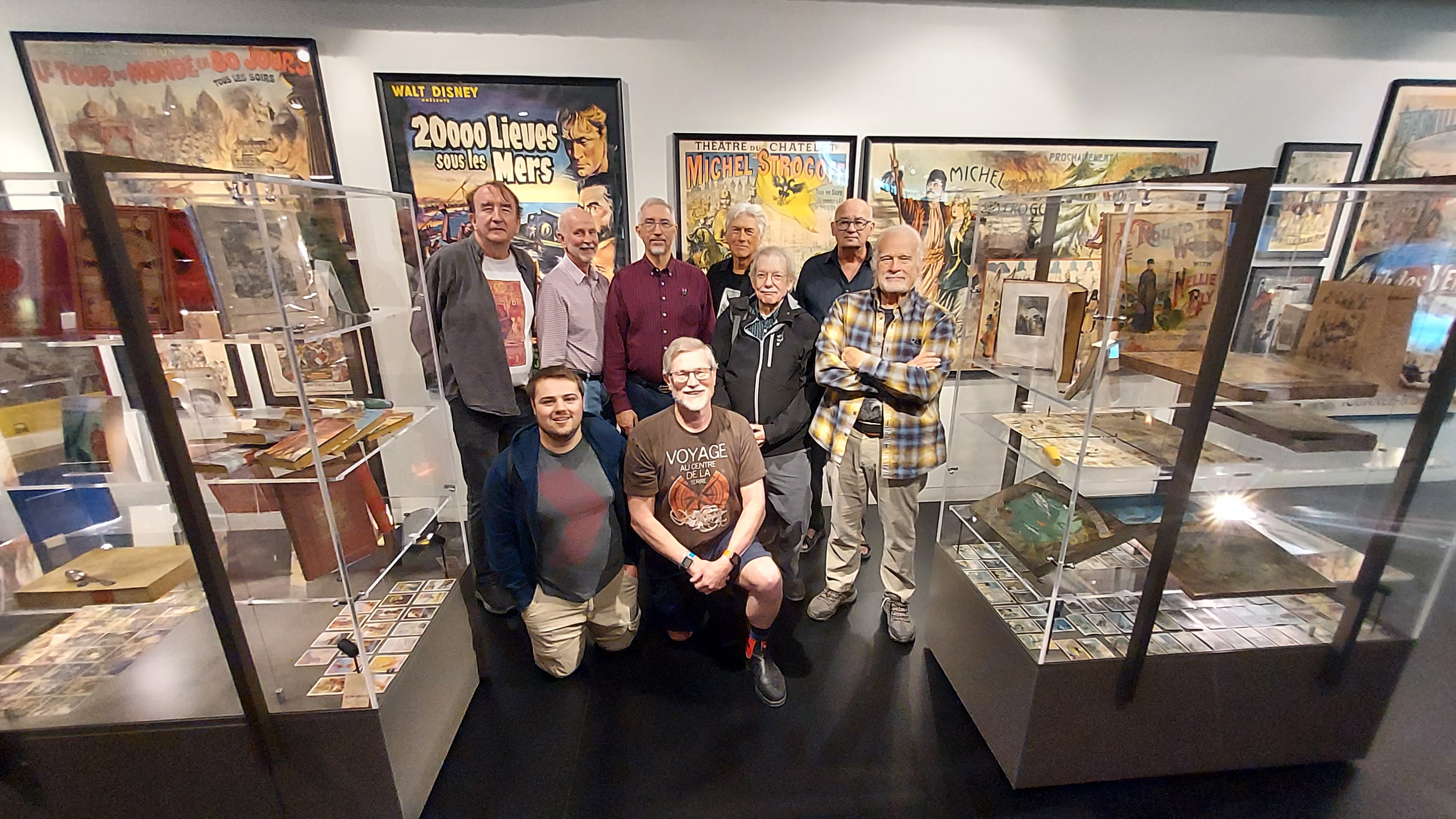
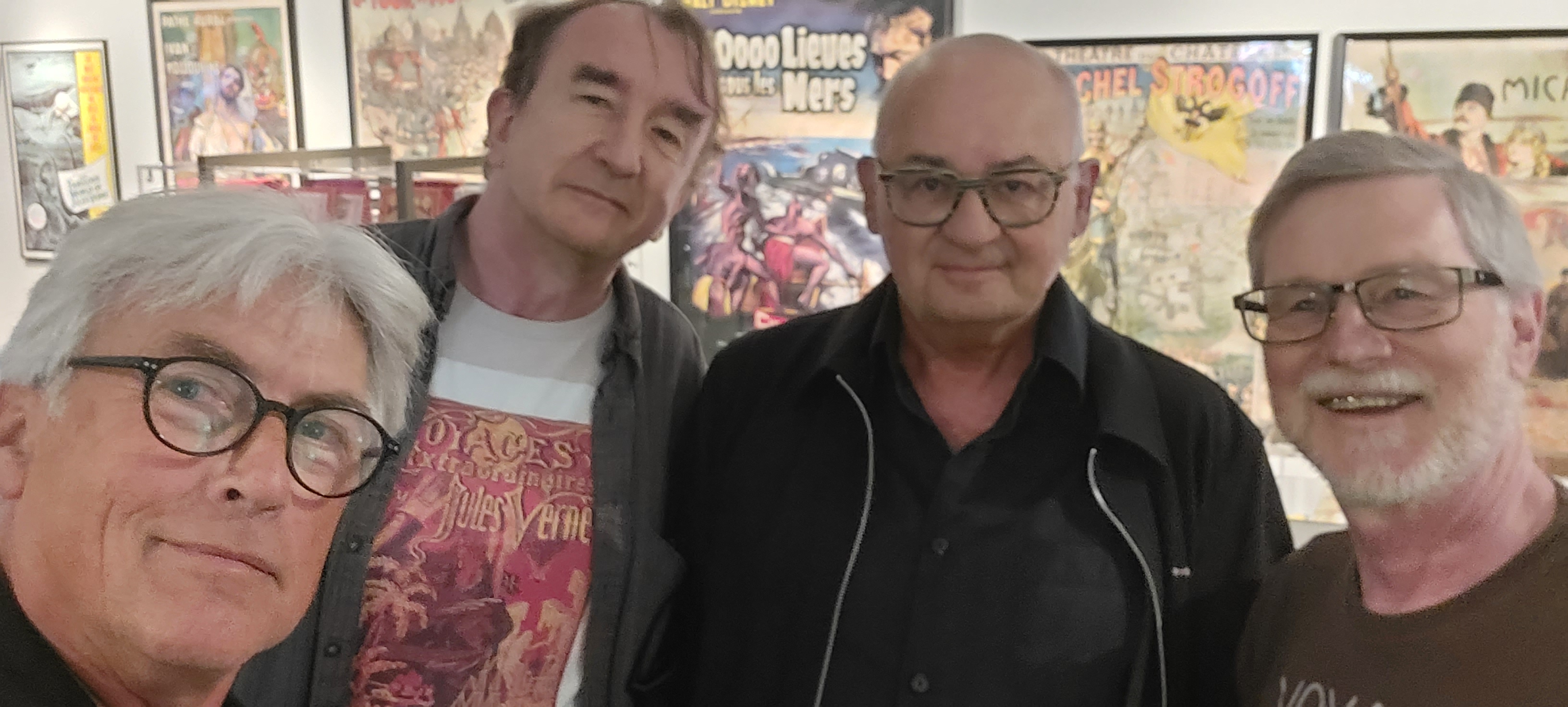
The North American Jules Verne Society – annual Conferance  – 2026,  3-7 June
in La Malbaie, Quebec, Canada
Days full of exiting experiences, of all kinds.
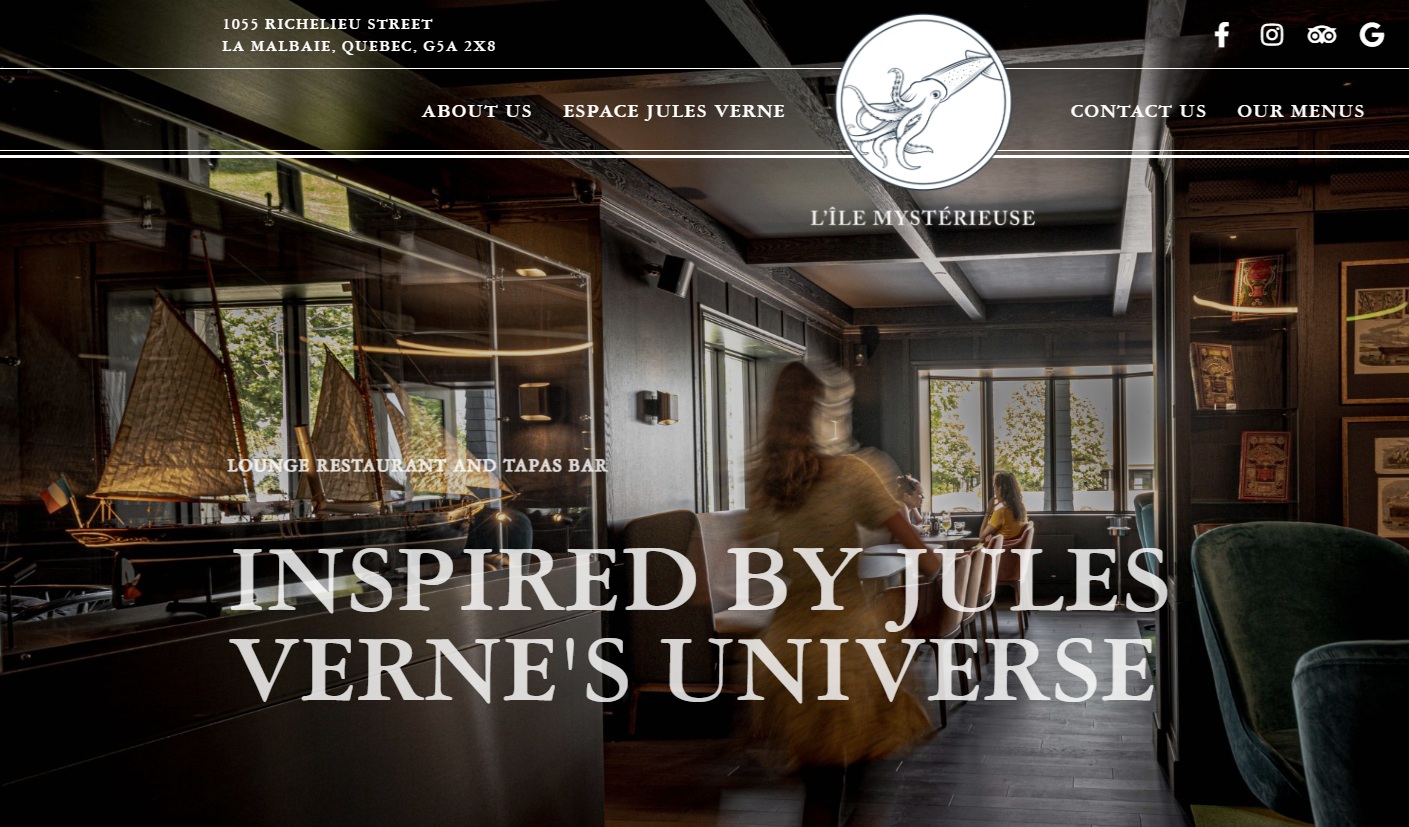
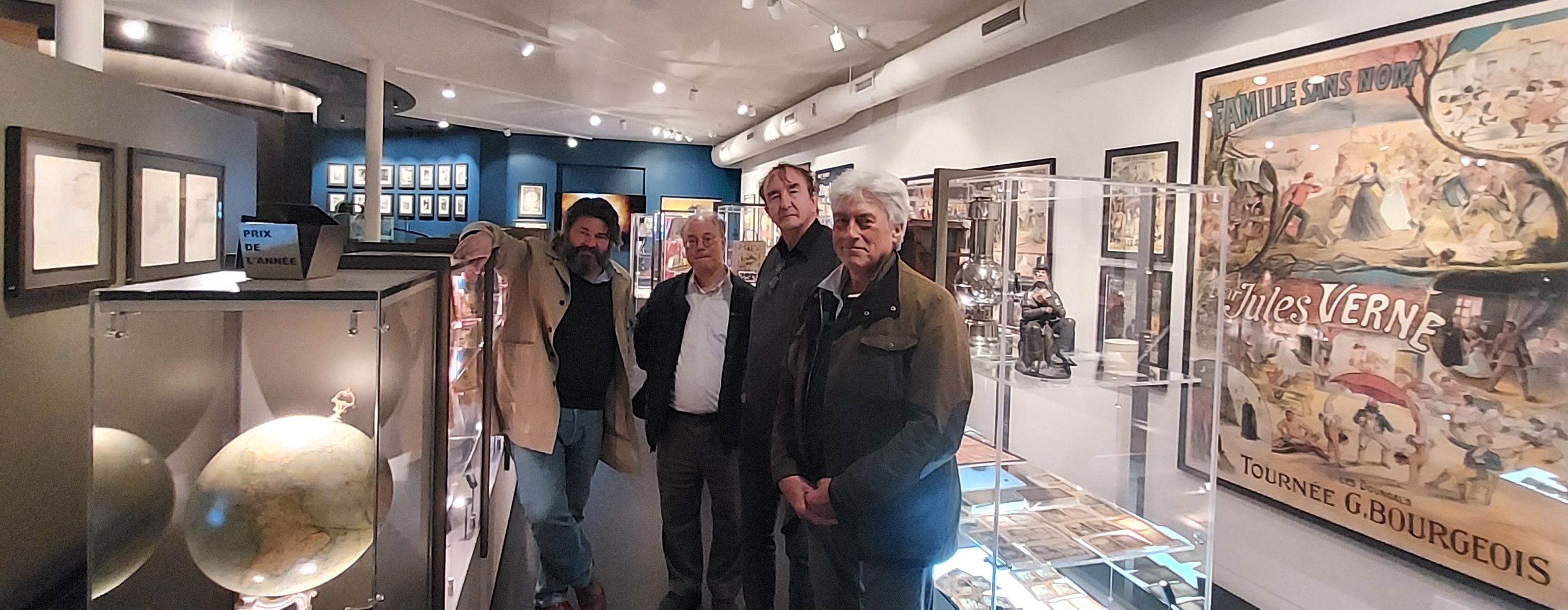
All centered around «L’Espace Jules Verne» – a most impressing collection/museum
located at «L’Île mystérieuse» – The Mysterious Island in La Malbaie village,at Saint Lawrence estuary.


AND:
You don’t get closer to this literary, imaginary Island than this
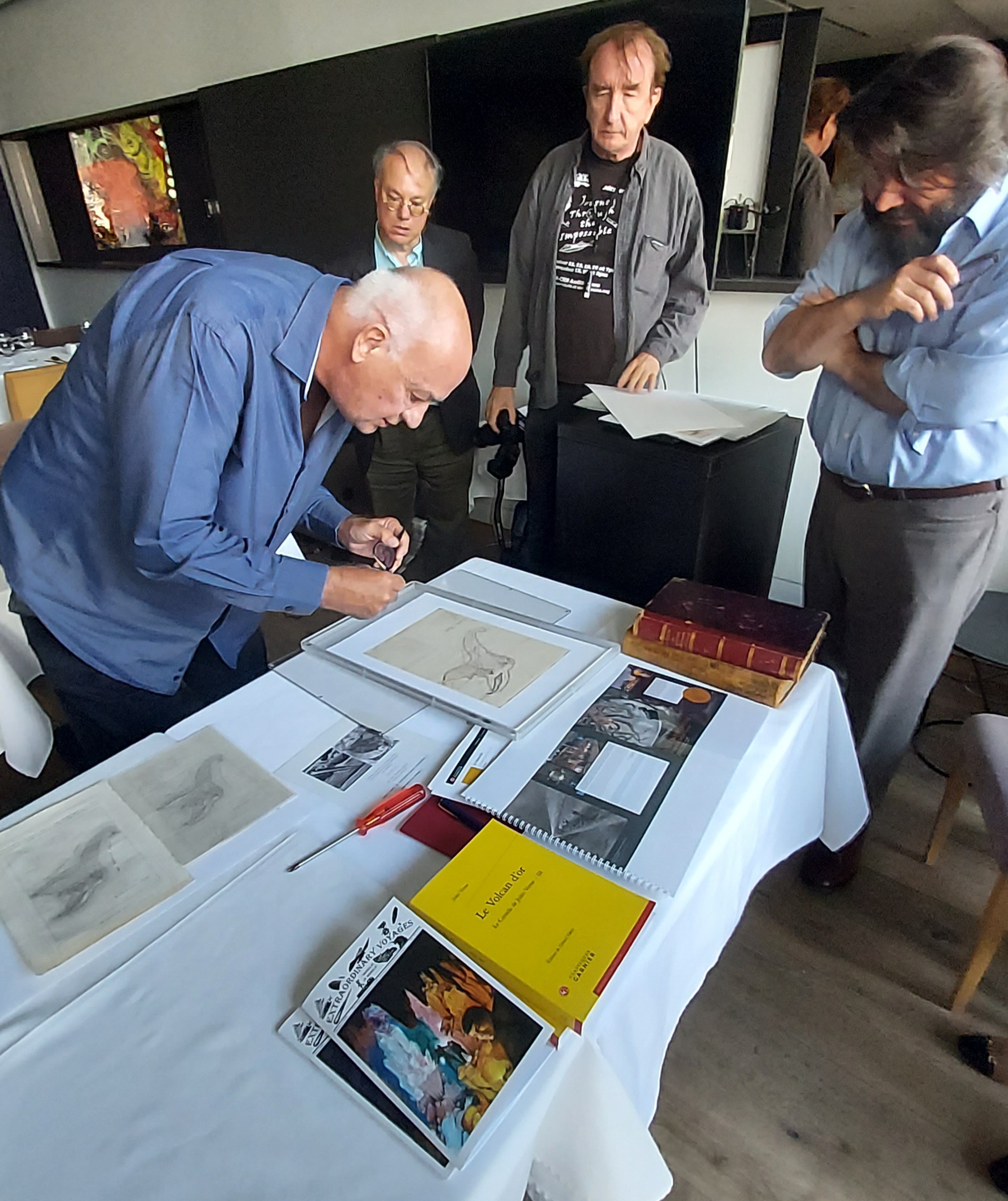
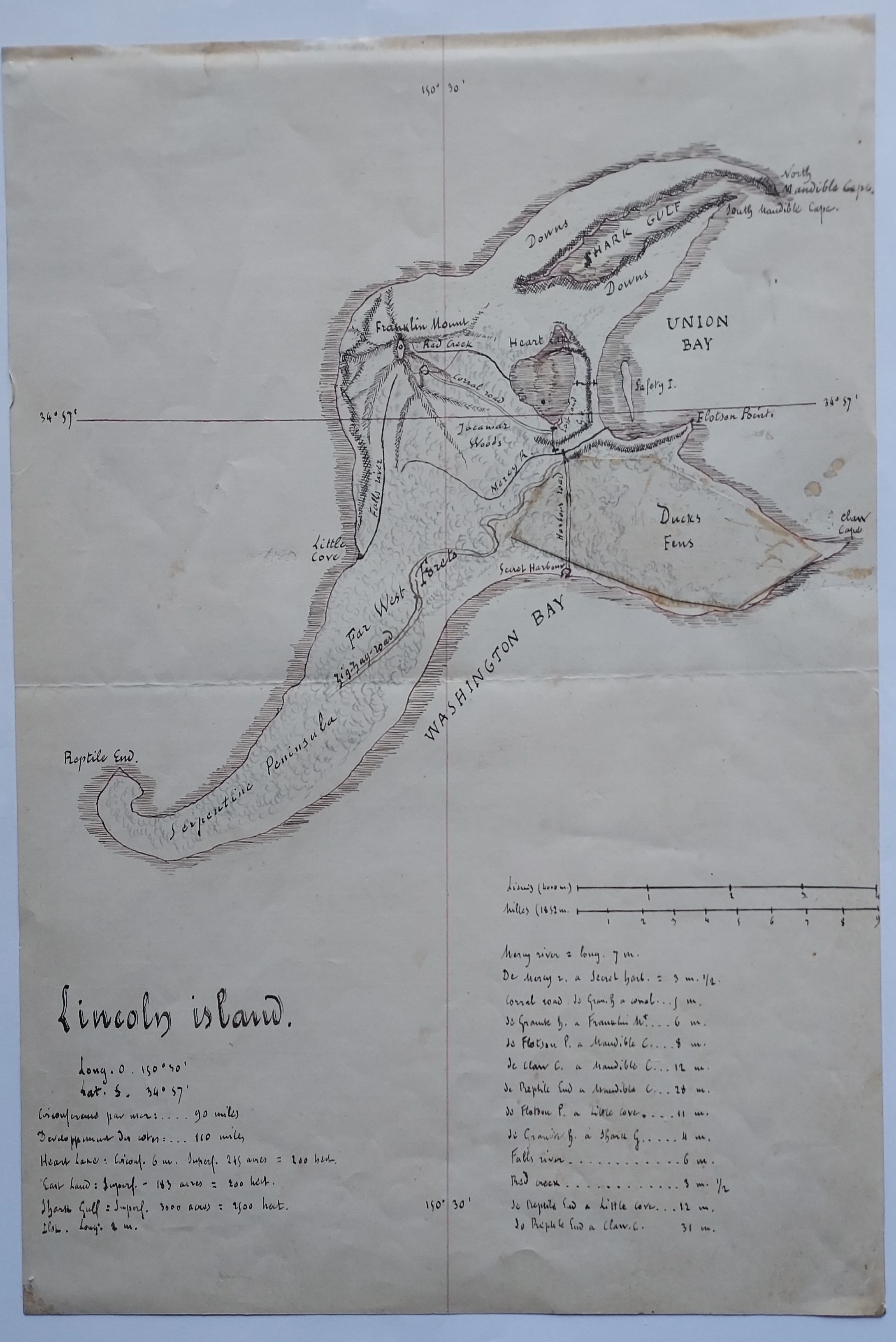
Because, ‘Collecteur Extraordinaire’,  Mr Jacquelin Bouchard, owns THE very hand drawing, made by Jules Verne himself – some 150 years ago.

Verne’s drawing of Lincoln Island the fictitious, non existing place, was dispalyed, exclusively,
for participating NAJVS members. (It is otherwise kept in vault – faximile only shown at exhibition).
A memorable moment – for me coming this far from the other side of the Ocean.
[ Work/writing in progress ]


.

NAJVS 2026 Quebec, Canada

Abstract                                                                                                 [PRESENTATION IS HERE]
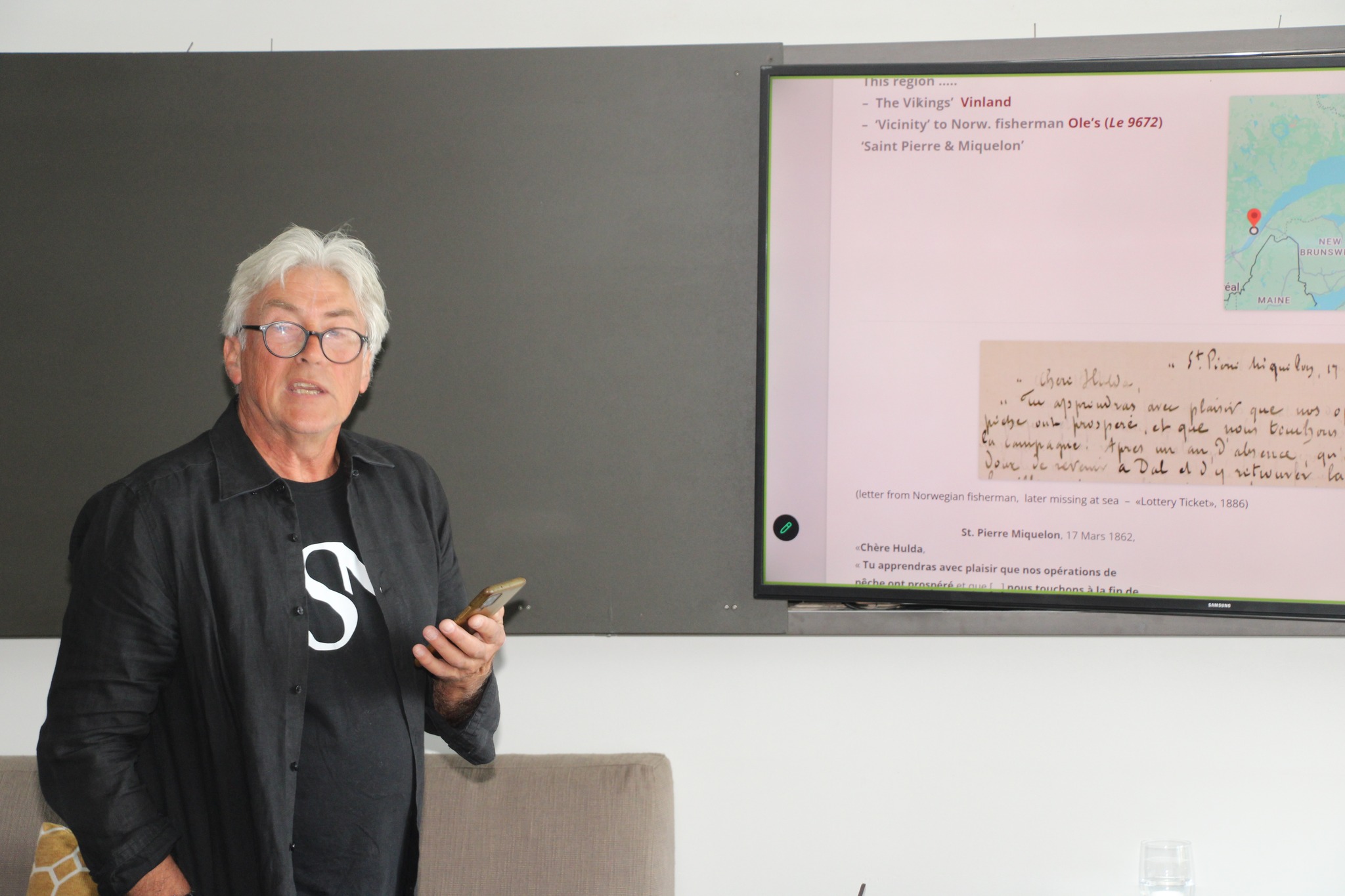
Presentation at NAJVS conference, La Malbaie, 4 June 2026
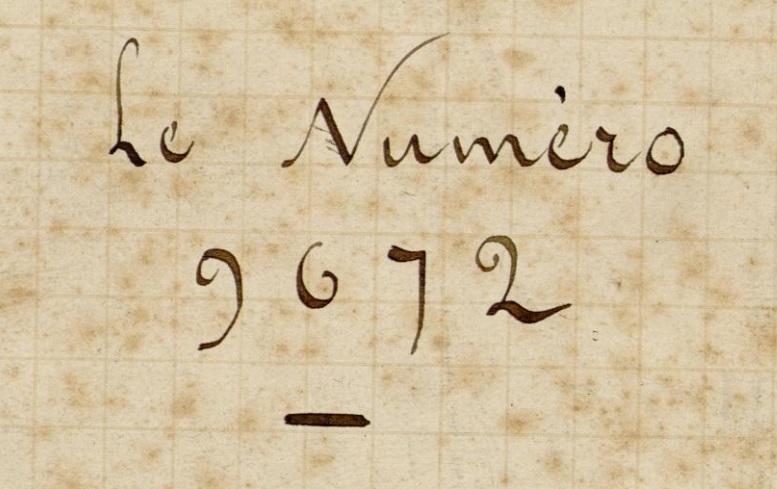
Per Johan Moe:  Jules Verne’s Scandinavia and «Le 9672»

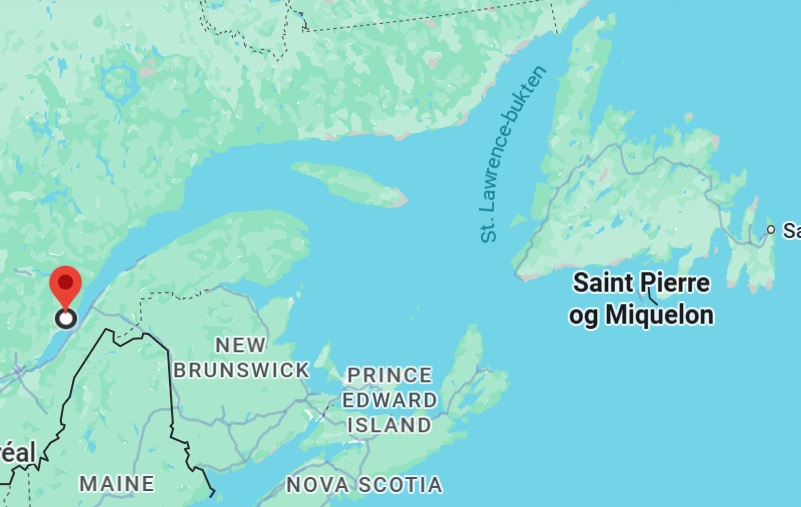
#  Norse Saga texts – links to Gulf of St. Lawrence
#  Hetzel: «Pourquoi, diable!   Verne, a-t-il choisi ce numéro difficile à retenir»  ( nov, 1885).
Proposed Hypothesis, as to this «WHY»

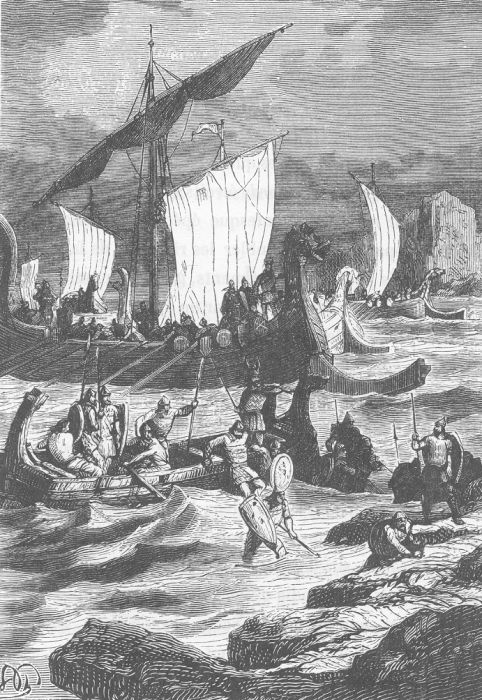
In several texts, Verne referred to the ancient ‘Sagas’, and described the Scandiavian countries, including their Norse, western realm, which for 500 years extended from Norway to the Faroes, Iceland and Greenland, in the medieval period. Verne’s knowledge about the ancient Norse Sagas, evident in several texts, include Heimskringla (Kings), The Edda (Mythology) and also Greenlanders’ Saga, about Viking-expeditions to Labrador and Newfounland – just outside Gulf of St. Lawrence.

In the novel Verne insisted on calling Le 9672 (published as «Lottery Ticket»),  – the author emphasise the Viking ancestry of Ole, a Norwegian fisherman based at French archipelago: «Saint Pierre & Miquelon» – also in Gulf of St. Lawrence.
On the surface a romantic story, the novel’s subtext indicate conflict and polarization during the Union years under Swedish king. Therefore  Le 9672,  published in the mid 1880ies, fits in among other novels with an ongoing liberation process that decade.
Focusing on Verne’s own manuscripts and diary – this presentation aims to discuss why Verne was so persistent about these enigmatic numbers: «9672»  –  and propose a hypothesis that might explain why he decided to start writing, some 25 years after his journey to Scandinavia.
Verne’s subtext in Le 9672, highlights the end of Swedish kings’ reign in Norway – shortly after ‘Parliamentary system of government’ was introduced.

Voyages to the Moon – SciFi & Reality

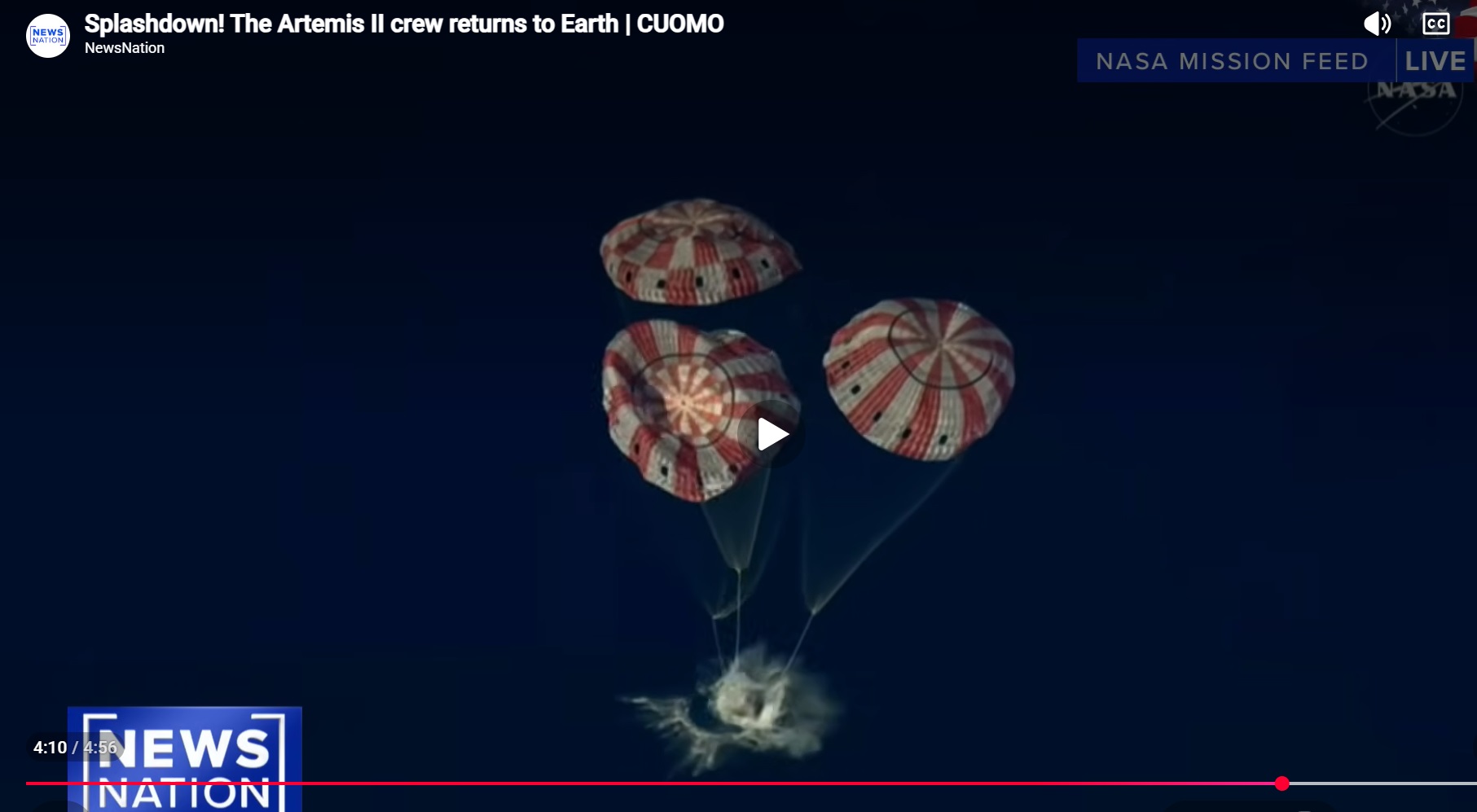
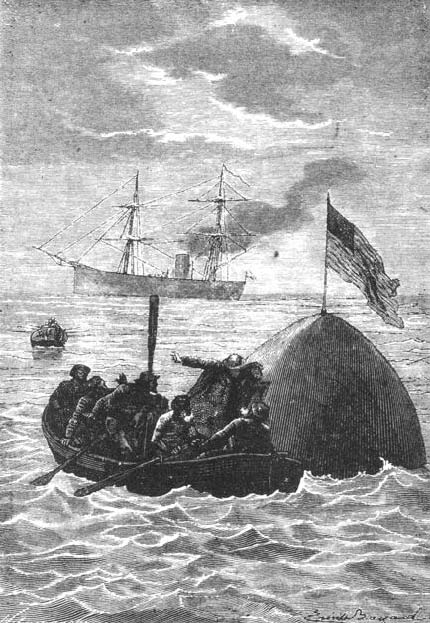
10. April 2026 – some 160 years after Jules Verne’s Science Fiction story about going around the moon and back – The crew on board «Artemis II» return from the furthest space journey ever. Their capsule splash down into the  ocean, in the exact same manner as in Verne’s fantasy.
The NASA speaker on TV, pays homage to Verne’s  Voyage Extraordinaire.

NASA announcer:
«From the pages of Jules Verne to a modern day mission to the Moon,
a new chapter of the exploration of our celestial neigbour is complete.»

A de-Hetzelised Verne
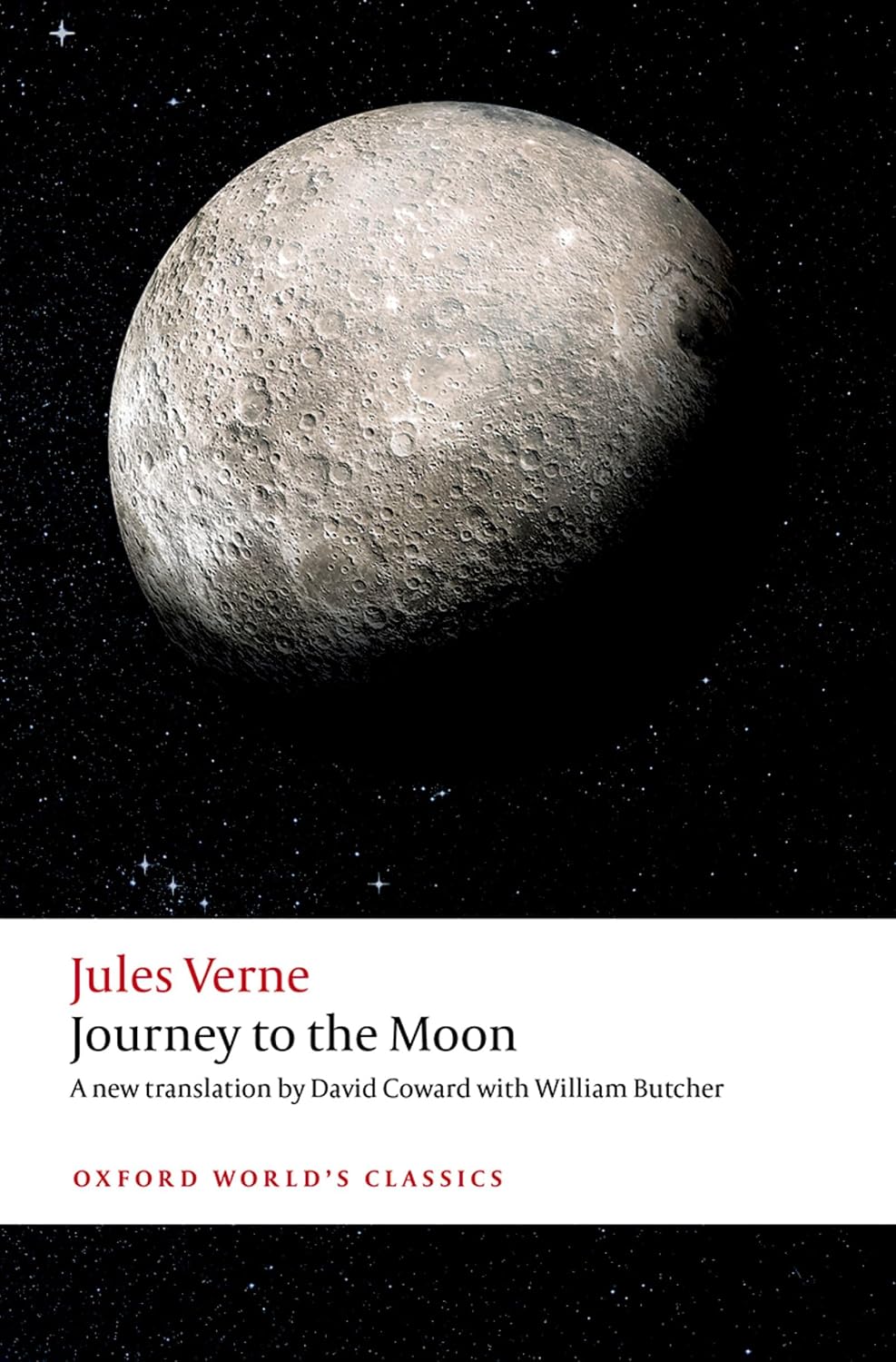
As also a NEW,  scholarly edition in English just came out (De la Terre à la Lune + Autour de la Lune, translated after Verne’s pre-Hetzel, untampered manuscript)  – a message for the International Jules Verne Forum online,  was due:

PJM:
«Journey to the Moon» – Coward and Butcher

As the ‘Artemis II’ MoonVoyage is returning to Earth from The dark side of the Moon…
I Just wanted to remind and recommend all JV Forum Friends,
of the Impressive work by David Coward and William Butcher,
in the Oxford World’s Classics series: «Journey to the Moon»
– timely presented as: «This edition the first ever to appear as the author wished»,
as it covers ‘TL’ & ‘AL’ together.

Both the translation, and, to me above all, the truly interesting critical material,
with Introduction and Appendix which clarifies the novel’s inception and development, makes this a SciFi Milestone.

What is also noteworthy, is the focus on those different published versions that exist in French.
(Not to mention the adapted ‘translations’ – on which commentators previously have misjudged the novel)

–  best, Per Johan M
PS.
( Going around the Moon and back, was once an incredible, futuristic vision of Verne.
Today, news desks are relaxed to such feats – let’s see if the return of Artemis II reaches top headline.
Then again, if TV screens show astronauts playing Domino upon reentry to our world …)

«blanc partout!» – Barbicane, Michel Ardan et Nicholl jouaient aux dominos


Jules Verne’s Scandinavia – an interactive Story Map

Explore the interactive map,
showing major sites in novels, set in the Nordic countries.
Indicates also selected places visited in 1861, during Verne’s own journey in Scandinavia.

Jules Verne’s Scandinavia, a ‘Story Map’
  [click to strt]

[work in progress ]
[PC or PAD= best experience]
The term ‘Scandinavia’ can hold several meanings:
– the Scandinavian peninsula
– the countries: Denmark, Sweden, Norway
– all Nordic countries (like: ‘Norden’)
In the following presentation, ‘Scandinavia’ = the latter
(includes therefore Greenland, Faroes, Finland)
Abbreviations:
Joyeuses Misères de trois voyageurs en Scandinavie [JM] (1861)
Voyage au centre de la Terre [VC] (1864; Journey to the Center of the Earth)
L’Épave du Cynthia [EC] (1885; The Waif of the “Cynthia”)
Un Billet de loterie [BL] (1885; Lottery Ticket No. “9672”)
Mirifiques Aventures de Maître Antifer [MA] (1894)
La Chasse au Météore [1901] [MQ] The Meteor hunt (1908/1989)
Bourses de Voyage (BV) «Travel scholarships» (1903)
De Rotterdam Á Copenhague [RoCo]  (1881)

Nautilus’ lettbåt, gjenfunnet i Lofoten?

Ny ‘Nautilus-fortelling’ skildrer leting i Norge etter ubåtens stål-jolle 

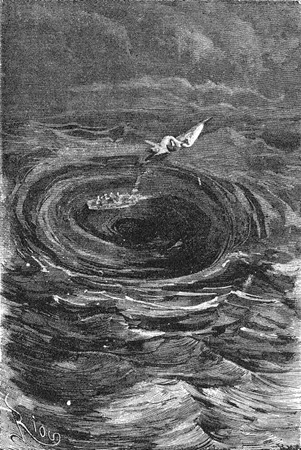
20000L_DisneyAlle norske Jules Verne -lesere har fått med seg at Kaptein Nemo seilte sin fantastiske undervannsbåt «Nautilus» rett mot selvutslettelse i Moskenstrømmen utenfor Lofotodden, like øst for Værøy. Sagn og litterære beretninger har beskrevet denne ‘malstrømmen’ – en sterk virvel-strøm – som skjebnesvanger, dersom skip kommer for nær. Og den franske forfatteren omtalte dette strømfenomenet i flere fortellinger enn bare i «En verdensomseiling under havet» (1869). [«Hivernage dans les glace, «Capitaine Hatteras», «Rayon Verte», «maître Antifer»]
I Vernes berømte roman bare antydes riktignok, at Nemo ser ut til å ville avslutte sin seilas og sitt liv ved å sette kurs rett inn i «Le Maelstrom». Men, de som kjenner ‘oppfølgeren’ – romanen «Den hemmelighetsfulle øya» – vet jo godt at kaptein Nemo faktisk overlevde, og først senere fant sin grav, på en avsidesliggende vulkanøy langt ute i Stillehavet.Uansett  – og her er vi fremme ved ovennevnte, ‘nye’ Nautilus-fortelling –
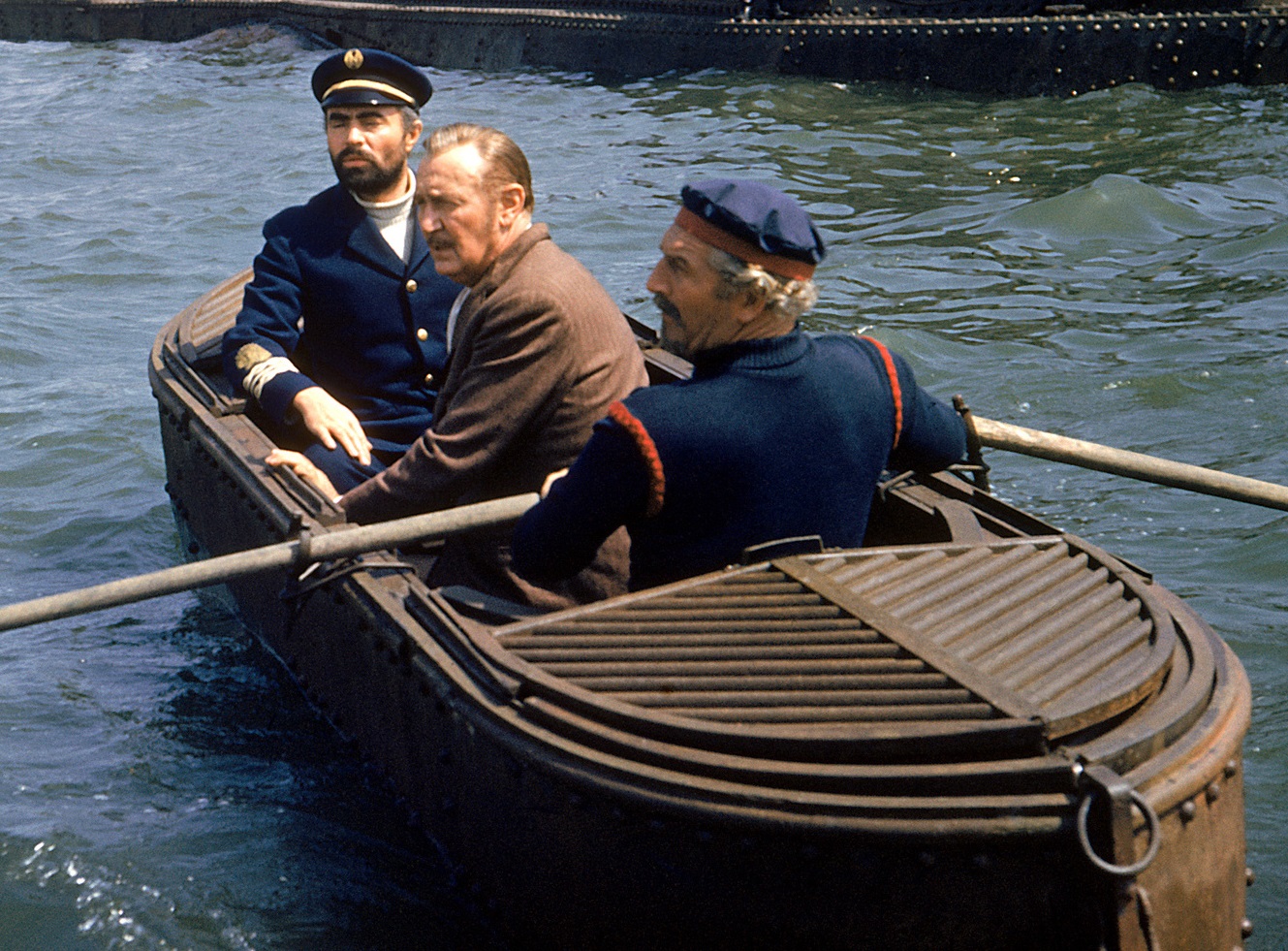
i boken om kaptein Nemo og Verdensomseilingen, hører vi i siste kapittel også om hvordan tre ufrivillige medreisende tyvlåner lettbåten fra Nautilus, og med den fossror innover mot fjæresteinene og redningen i Norge.

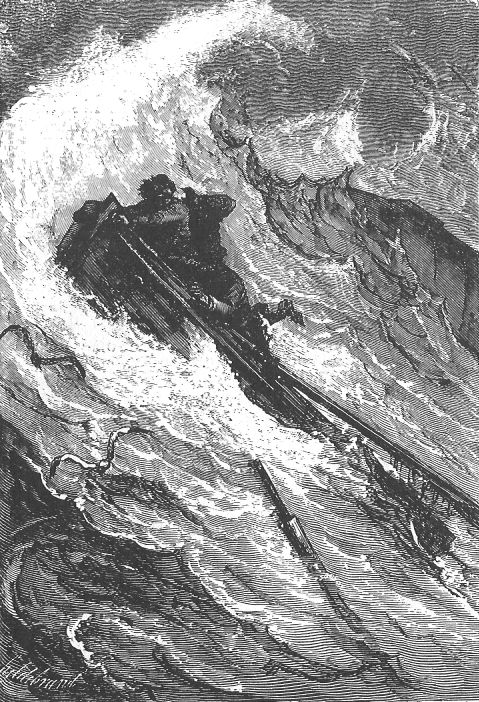
En meget talende illustrasjon viser her (vel å merke kun i komplette utgaver – utrolig nok ikke gjengitt i de fleste norske) hvordan Aronnax, Land og Conseil blir tatt hånd om av en norsk fiskerfamilie. På bildet ser vi hvordan de får i seg styrkende drikke, angivelig i et naust i vannkanten der det fra taket henger garn og fisk til tørk.

Etter dette er fortellingen over, og man forstår at de overlevende kort etter tar kystrutebåten sydover.
Men deretter;
hva med lettbåten fra Nautilus som angivelig var bygget i stål …
– hva ble det til med den?
Ble den liggende inne i dette båt-naustet ute i Lofoten?

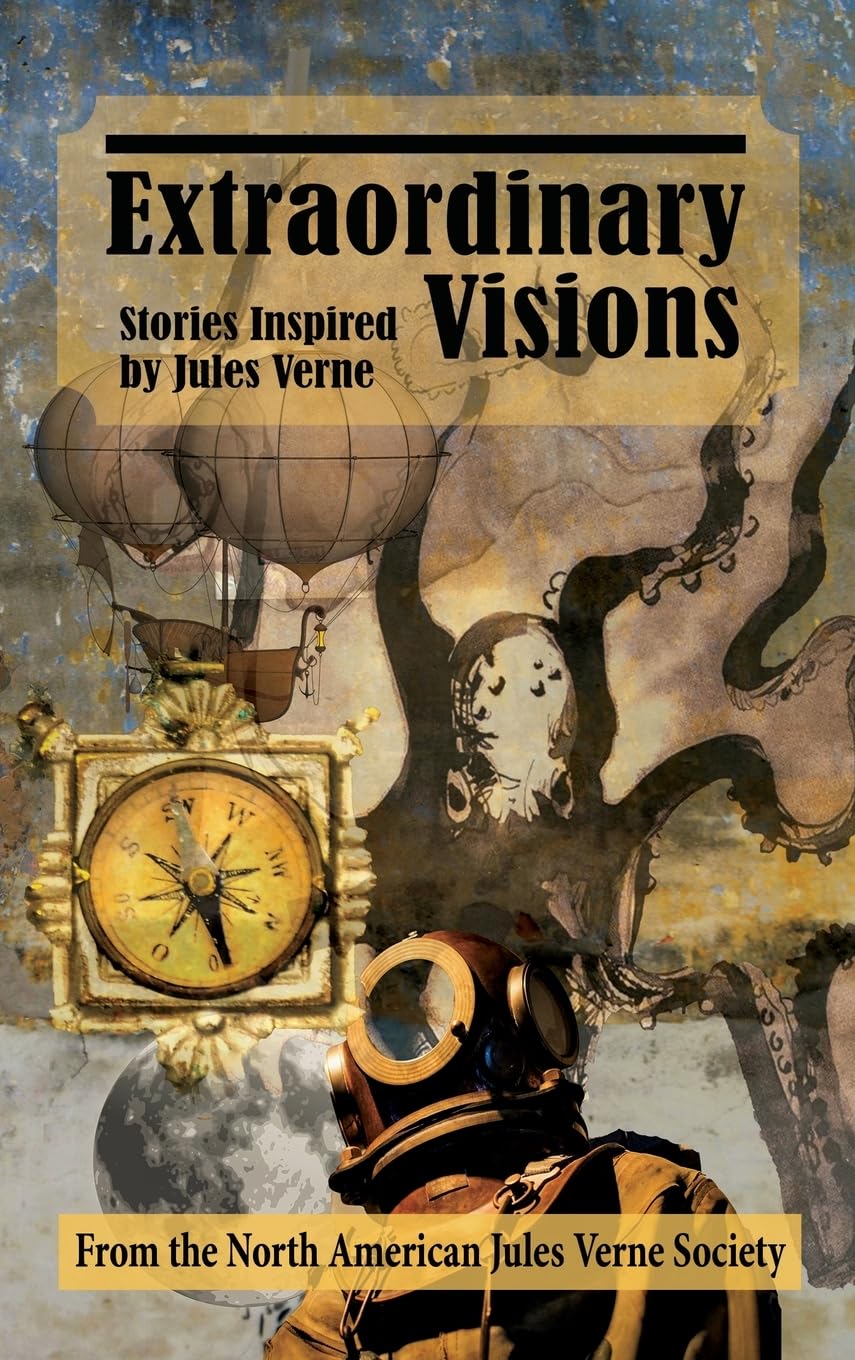
Dette får vi svar på i en rykende fersk novelle skrevet av ubåtkaptein (!) Demetri Capetanopoulos. Hans novelle «Rust and Smoke», er med i den nyutgitte antologien Extraordinary Visions: Stories inspired by Jules Verne
.
[NorthAm. J.Verne Society _bokkjøp].
[Intervju med forfatterenNettsted, Precise Imagination]
.
[ continue reading  Fortsett lesing ]

Verne, utopier og anarkisme omtalt i norsk dokufilm

Jules Vernes tanker om «Libertariansk individualisme og utopisk sosialisme»
– belyses i ny film om det tragiske utopi-prosjektet (1923) til Rjukan-redaktør og anarko-syndikalist Ludvig Bernhard Aas.


Filmen «Et helvete uten like» (nov.2025) antyder at kanskje kan slike ideer ha medvirket, da arbeidsledige ‘bråkmakere’ – anført av redaktør Aas – valgte å emigrere til Brasil for penger de fikk for å forsvinne bort fra det nedgangstyngede Rjukan-samfunnet på 1920-tallet.

For, da Jules Vernes bok om anarkisten Kaptein Nemo første gang kom ut i norsk språkdrakt, var utgiveren den samme Ludv. B. Aas (1874-1924).

Kanskje hadde han blitt inspirert politisk av innholdet. Uansett sørget Aas’ forlag i 1894 for tilretteleggelse av en praktutgave med verkets originalillustrasjoner. Dette fremkommer i en ny essayistisk dokumentarfilm av filmskaperen Mirko Stopar.

I et intervju her orienterer Jules Verne-forsker Per Johan Moe om de politiske ideene som Verne var opptatt av, og som fremkommer i flere av hans verk: Libertariansk individualisme og utopisk sosialisme.
Fortsett lesning

170 år siden Vernes første beskrivelse av Norge

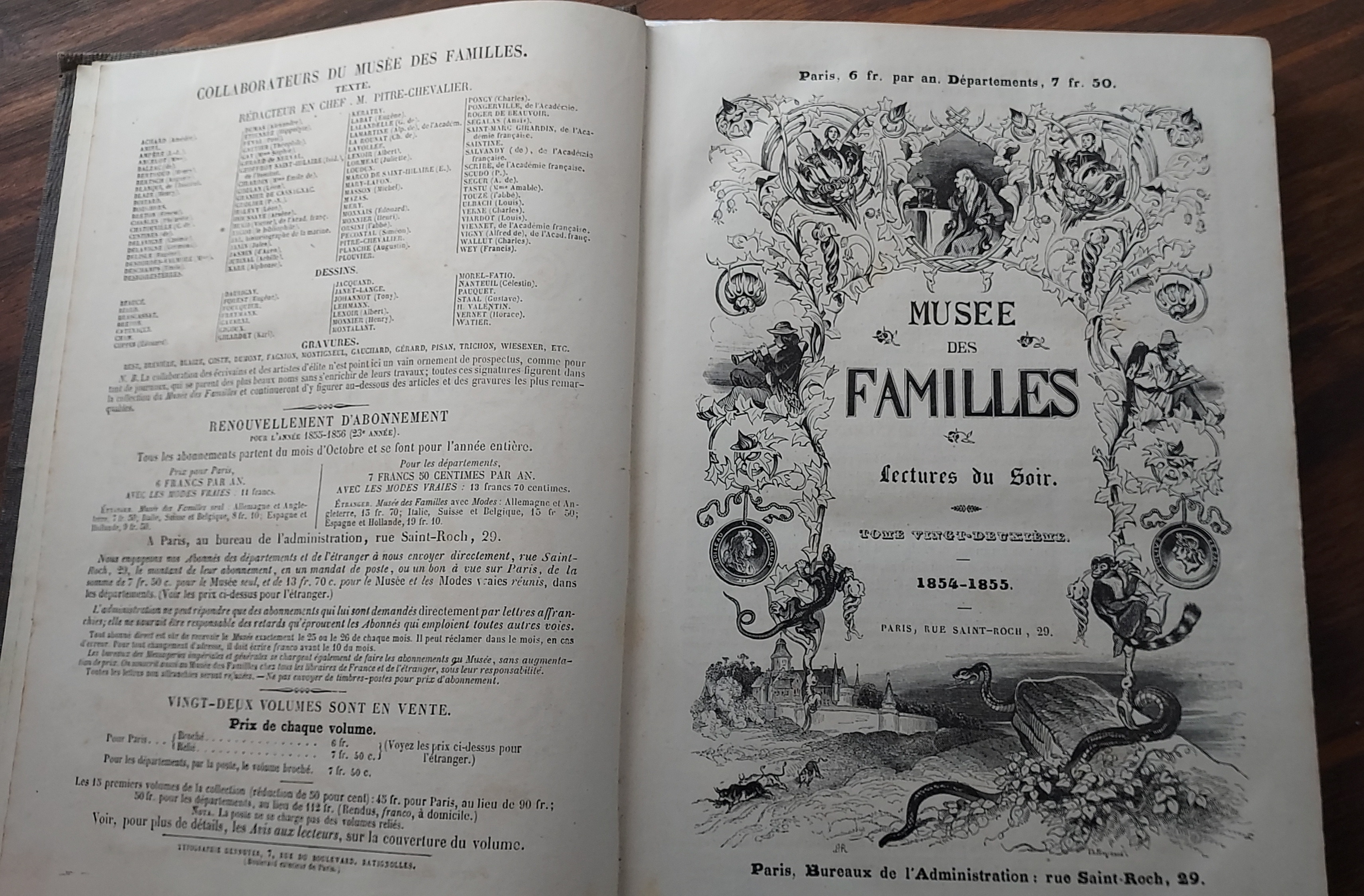
I 2025 er det 170 år siden den unge (27), uoppdagede forfatterspire Jules Verne, i 1855 fikk trykket Un hivernage dans les glaces, en av sine aller første fantasireise-fortellinger. Med andre ord, seks år før han fikk bokkontrakt og før han selv hadde anledning til å besøke landet han skrev om, i fortellingen om en leteaksjon etter franske fangstfolk utenfor kysten av nord-Norge. Da forfatteren i 1861 besøkte de skandinaviske landene, var Jules Verne et ukjent navn, selv om en forkortet versjon hadde stått å lese i det danske magasinet «Illustreret Folkeblad» i 1857, kun to år etter første publisering, i det franske «Musée des familles». Dette var den aller første Jules Verne-teksten som ble trykket i Norden.

Etter at forfatteren kort etter Norges-reisen møtte forleggeren Pierre-Jules Hetzel, kom fortellingen ut som bok i 1874, og i noe forkortet form i samlingen Le Docteur Ox [Dr. Ox’ eksperiment og andre historier]
Teksten er aldri trykket på norsk. Den danske oversettelsen kan leses her:
Jules Verne: «Paa isen»,  (Illustreret folkeblad 1857).

Kort-fortellingen Un hivernage dans les glaces [En overvintring i isen], ble til etter at forfatteren som 27-åring hadde besøkt sin onkel i fiske- og fangst-byen Dunkerque ved Nordsjø-kysten. Fra denne havnebyen gikk en rekke fangstekspedisjoner nordover. Her starter også Vernes fortelling. Den beskriver en rundreise i norske farvann ved Nordland, Mosken-strømmen, Færøyene og Jan Mayen, og innbefatter en overvintring på Grønland, sammen med norske sjømenn.

Jubileums-anskaffelse i 2025
Undertegnede leste tidlig Vernes ungdoms-verk, om denne reisen langt mot nord. I bokhyllen står flere versjoner –  bl.a. førsteutgaver i bokform
fra andre halvdel av1800tallet, både på engelsk (1876) og fransk (1874).

Når det gjelder fysisk eksemplar av magasin-versjonen, trykket i «Musée des Familles», ville det ha seg slik at da det var akkurat 170 år siden fortellingen første gang ble publisert – snublet jeg over heftene fra mars og april 1855 (!). En fransk privatinnbundet samling av hele årgang 22,  kom for salg akkurat da jeg reiste gjennom Frankrike, sommeren 2025:

Original tekstversjon på fransk fra 1855, kan leses her
[NB s.169 er i PDF feilplassert, sist]
.
Fortsett lesning – Continue reading

Verne in Stockholm, at Hotel Rydberg

Jules Verne’s arrival in the Swedish capital,
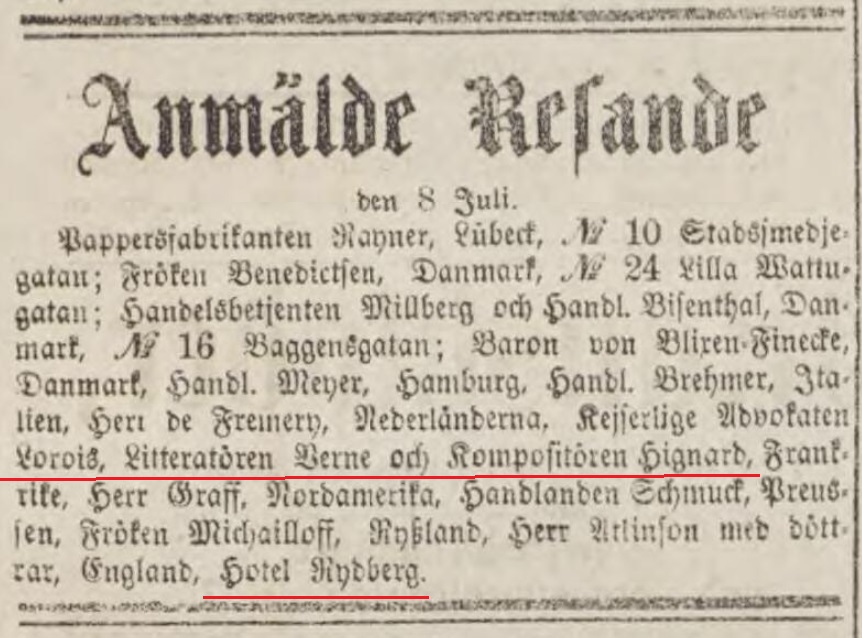
registered in newspaper Stockholms Dagblad, 8 July, 1861.
It has been well known among Scandinavian Vernians, in which hotels the french author and his friends stayed in the summer days of 1861. But on ‘The Scandinavian JV Portal’ documentation has been missing, regarding the Swedish capital.  Anyway –  possible doubts can now be put aside, newspaper Stockholms Dagblad, had updated arrivals:
«Anmälda Resande den 8 Juli. […] Advokaten Lorois, Litteratören Verne och Kompositören Hignard, Frankrike […]  Hotel Rydberg«.

Verne diary, Sunday 7 July, 1861:
«- arrivèe en Stockholm Dimanche – paysage – vue de la ville – la Douane a visité – les portons – omnibus en corbillards – hotel Rudberg – le livre d’hotel – fiere d’etre Francais –  promenade au lac Melare [Mälaren] – Bateau a vapeur pour traverser le lac – Dalecarlienne […] pour frai[…] en banque – retour au parck(?) petite promenade au Gavin’s (?) cafe – restaurant Francaise place Gustav Adolphe –  petite bateau a vapeur faisant le service […] d’arrive cafe et du park «

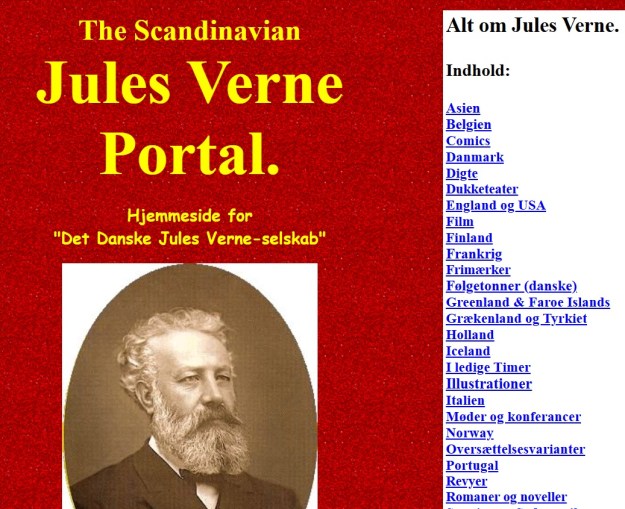
Scandinavian Jules Verne Portal

The webpages of «Jules Verne Selskabet»
– is back online ….

The website was not updatet for a long time. Eventually, «jules-verne.dk» was discontinued and webhotel shut down.
Anyway, all files were downloaded, and a ‘mirror’ website has now been created. This ensures that the great work of webmaster Bjørn Larsen, still can be accessed. His webpages contain illustrated bibliografies for all the Nordic Countries and is an invaluable source in Verne related Book History.
.
The Scandianian Jules Verne Portal is now available here
Also available from www.julesgverne.com/jvportal

Jules Verne at Notodden

J.Verne diary

«a midi 1/2  arrive à Tiness – un ferme tres grande»
Jules verne, 26. July 1861 
[12:30, arriving at Tinnes – a very big farm]
.
This weekend 50 000 music lovers gather for 4 days, at the shore of lake Heddal in Telemark, to listen to their favourite artists at «Notodden Blues Festival», in Norway.

As the population the rest of the year is only 13000, it is obvious that getting accomodation enough these festival days, strains all possibilities. Myself, I decided to contact the ‘Su-Tinnes’ farm, situated on a hilltop overlooking the town, within walking distance to all the music venues. Here, visitors can book a ‘stabbur’ to stay the night – a converted log-cabin, initially built back in the 1800s, for food storage.

I spent the night here, at this «ferme tres grande», on the Hitterdal road. Most likely, at the very same spot, where Jules Verne, then age 33, stopped to admire the view and make a quick sketch in his diary.

This incredible location high up on the headland, exactly where the landscape opens up towards the lake and the valley, offers visitors a magnificent view, after descending from the forests surrounding the silver mines at Kongsberg (King’s mountain).

«maison a Tiness»

In a quite similar way it probably impressed  [also music lovers] Jules Verne and composer Aristide Hignard, together with their friend Émile Lorois, arriving here in 1861. Foreign travellers have, since the 1800’s, visited these parts of Telemark to see the waterfalls – and, just like these three French voyageurs – to admire the famous 13th century Heddal (Hitterdal) Church.

Along the way, the most natural thing to do is (as any one would) :  ‘take snap shots’ of the surroundings.
Verne describes briefly his Scandinavia days in July and August, in his diary: «Carnet de voyage 1861»  (Bibliothèques d’Amiens Metròpole)
On every page of the diary, Verne’s impressions of nature and scenery are expressed verbally. But his many observations of architecture along the way, are registered by means of drawings. [see all Verne’s drawings here]

As was the case on Verne’s arrival in 1861, passing this very first and biggest farm any traveller would encounter, following Hitterdalsvegen (The Hitter-valley-road) on the west bank of the Tinn river : The main/ southern Tinnes -farm.

Verne, during his stop, draws a quick sketch with few details (probably later to be elaborated further) of such a logcabin he saw, typical of the area.
(Several, almost identical examples exist – some are displayed at the nearby  outdoor museum, as these type of buildings can be dismantled and relocated)

Verne’s indication of light direction, evident in drawing, means it might easily be the exact same which is depicted in my above foto, which has an identical orientation, N/S.

So, did Verne and friends spend time here at Notodden?
According to diary, after an early start [06:30) from Madame Hansen’s hotel at Kongsberg, the party arrived the Tinnes farm around mid day, after eating lunch at a ‘very nice guesthouse’.
«a 9 heures, nous nous arrêtons pour dejeuner dans un auberge fort propre »
[Probably ‘Kobbervollane’ relay station – see map]
– and then again, according to diary, dining around 2 o’clock at relay station «Listhus», close to the Heddal stave-church, some 5 km further along the Hitterdal road. [see scan: «Listhus station arivee a 1:15» ]. Therefore, they probably just had a brief stop to admire the spectacular view of the valley and lake Heddal. There is no indication in Verne’s diary, that they made a stop to eat at the Tinnes farm.

[see jules-verne.no / julesgverne.com  for more details on Verne & Norway]
………..
[This was written during the «Notodden Bluesfestival 2025» by PJMoe,
who also attended the festival hosted symposium:
«UNESCO,  Rjukan-Notodden Industrial Heritage – 10 years»

Note:  among their website featured stories , is the Verne -related, :
«Visiter le Télémark? Med billett til jordas indre, Heddal og Tinn»
which is a description of Verne’s journey through Telemark.
– borrowing extensively from the afterword (PJMoe), for the latest Norw. translation of Verne’s: «Voyage au centre de la terre /1864» (Vidarforlaget 2018)
This aft.w. highlights many elements from the above mentioned 1861 Verne diary]